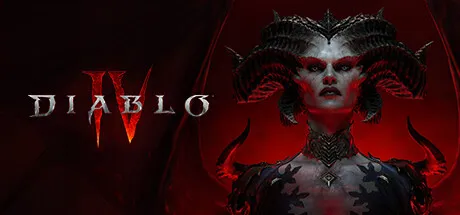
Diablo IV: Lord of Hatred Review: Mephisto's Masterpiece
Blizzard's second expansion brings the Paladin, the Warlock, the island of Skovos, and a complete skill-tree overhaul that transforms Diablo IV into the game it always should have been.
Introduction
Sixty hours into Diablo IV: Lord of Hatred, sinking 60 hours into Diablo IV: Lord of Hatred during early access, I can say without reservation that this is the expansion Diablo IV has been waiting for. Where Vessel of Hatred introduced the Spiritborn class and the jungles of Nahantu, Lord of Hatred goes bigger in every direction – two new classes, an entire island region, a complete skill tree overhaul for every class in the game, and the return of the Horadric Cube. Mephisto, the Lord of Hatred himself, finally takes center stage, and the confrontation Blizzard has been building toward since launch delivers on nearly every front. This is Diablo IV fully realized.
Gameplay & Mechanics
The headline additions are the Paladin and the Warlock, and both are excellent. The Paladin is a triumphant return of the Diablo II holy warrior – Blessed Hammer spins are as satisfying as they were twenty-five years ago, and the new Arbiter Form that grants flight on angel wings is the kind of power fantasy that makes you feel unstoppable. The Oath system lets you overlay synergistic buffs that convert defensive stats into damage multipliers, creating build depth that rivals the best theorycrafting in Path of Exile. Zeal, Blessed Shield, and the suite of Auras all feel modernized without losing their identity.
The Warlock is the wilder design. Billed as masters of Demonology, Warlocks summon and transform into demons, but unlike what you might expect from a summoner archetype, they're predominantly melee casters. The Metamorphosis builds that let you shapeshift into demonic forms are thrilling once you understand the rhythm, but the first few hours feel clunky as you try to reconcile caster instincts with melee positioning. Stick with it – once the class clicks, it offers some of the most creative builds in the entire game, from stealth-assassin playstyles to full summoner armies.
But the true game-changer is the skill tree rework. Every single one of the eight classes gets expanded, class-specific variants with over 40 reworked choices and 80 additional options per tree. Expansion owners get 20 more transformative choices on top of that. My Necromancer, which had started to feel stale after hundreds of hours, suddenly had entirely new build paths to explore – including the ability to change spell damage elements. This isn't a balance patch; it's a reinvention of every class in the game.
The Horadric Cube returning from Diablo II is the crafting cherry on top. Rare material recipes let you create playstyle-specific gear rather than praying to the RNG gods, and the Talisman system – new equipment with charm slots granting set bonuses – adds another layer of build customization that rewards dedicated farming.
Graphics & Performance
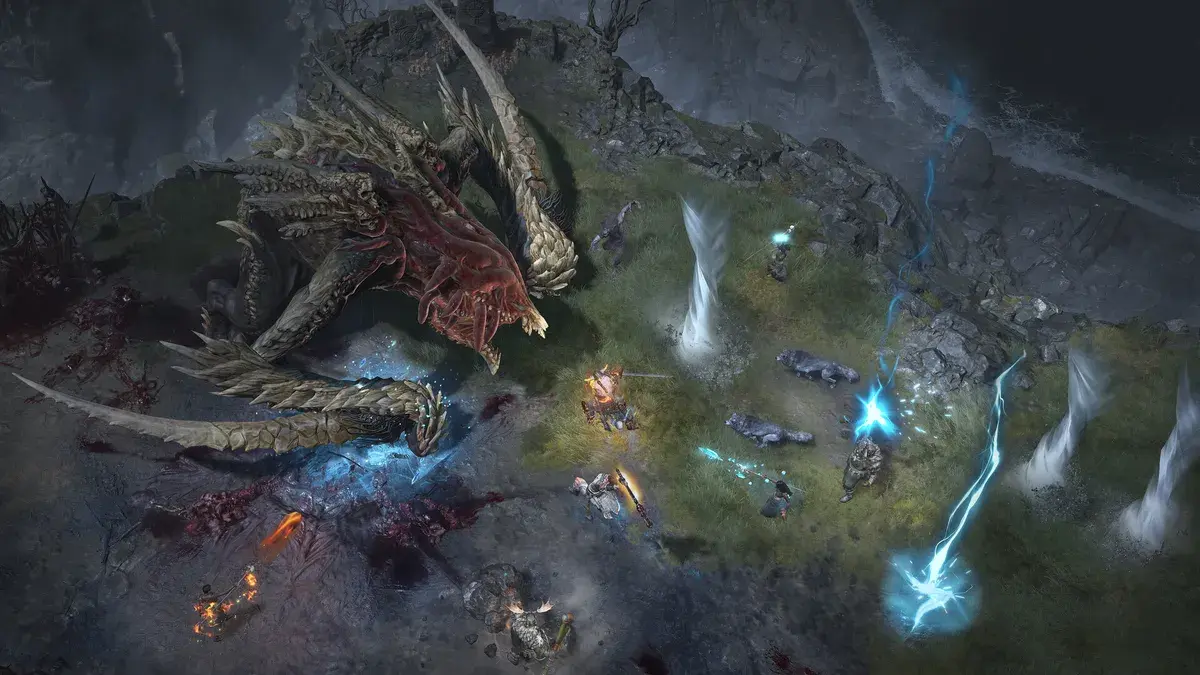
Skovos is breathtaking. The Amazon homeland features volcanic coasts, storm-lashed forests, and waterlogged ruins that feel distinct from anything else in Sanctuary. The environmental storytelling is rich – crumbling temples to ancient warrior-goddesses, harbors choked with the wreckage of merchant vessels, and underground caverns lit by bioluminescent fungi. Blizzard's art team has outdone themselves, and Skovos instantly becomes the most visually memorable region in Diablo IV.
Performance on PC is solid at high settings on modern hardware, though the new region's density can cause frame dips in crowded world events. Console performance on PS5 and Series X holds a steady 60 FPS in most situations, with occasional drops during the most chaotic Helltide encounters. The loot filter – finally – means you're no longer pausing every thirty seconds to sort through garbage drops, which does wonders for maintaining gameplay flow.
Story & Narrative
Lord of Hatred brings Mephisto front and center, and the confrontation lives up to years of buildup. The campaign follows directly from Vessel of Hatred's conclusion, with players forming an uneasy alliance with the presumed-dead Lilith to prevent Mephisto's true form from being reborn. The writing is Diablo at its darkest – betrayals, moral compromises, and the creeping realization that hatred isn't just Mephisto's weapon but a corruption that seeps into every character's motivations.
The Skovos setting adds cultural richness through the Amazon civilization, governed by the Oracle and the Amazon Queen. Side quests explore the tension between tradition and survival in a world where demonic forces are encroaching from every direction. It's not the deepest RPG storytelling, but for Diablo, it represents a meaningful step forward from the base game's occasionally unfocused narrative.
Audio & Soundtrack
The score for Lord of Hatred is exceptional. Skovos's ambient music blends Mediterranean strings with ominous choral arrangements that perfectly capture the collision between the Amazons' proud culture and Mephisto's corrupting influence. Boss encounter music is appropriately thunderous, and the Mephisto fight's audio design – layered whispers, distorted laughter, and a crescendo that builds across multiple phases – is some of the best sound design in the franchise. Voice acting is consistently strong, with Mephisto's voice performance standing out as unsettling.
Value & Replayability
At $39.99 for the standard edition, Lord of Hatred is a significant investment on top of the base game and Vessel of Hatred. But the content justifies the price. Two new classes, a full region, the skill tree overhaul that affects every class, the Horadric Cube, and new endgame systems like War Plans – which let you select up to five activities and modify them through a dedicated skill tree for personalized rewards – and Echoing Hatred, a relentless gauntlet with randomized scenarios, give you months of endgame grinding.
The expanded 16 Torment tiers (up from 4) ensure that the difficulty ceiling scales well beyond the old cap, and the new content integrates smoothly with existing endgame loops. Fishing as a relaxation activity is a charming addition, though it's clearly a diversion rather than a core feature. For Diablo IV players, this is essential content.
Final Verdict
Diablo IV: Lord of Hatred is the expansion that completes the vision. The Paladin and Warlock are two of the best-designed classes in franchise history, the skill tree overhaul breathes new life into every existing class, and Skovos is a region worth exploring every corner of. The Horadric Cube, loot filter, and War Plans system address nearly every major community complaint about the endgame. At $39.99 it's not cheap – especially if you're buying into the full Diablo IV ecosystem for the first time – but the sheer volume and quality of content earns a confident 9 out of 10. Mephisto's return was worth the wait.
Buy if: You're invested in Diablo IV's endgame, love deep build customization, or have been waiting for the Paladin's return since Diablo II.
Skip if: You bounced off Diablo IV's core loop or aren't willing to invest in the base game plus two expansions to get the full experience.
Technical Performance
The PC version offers the highest ceiling for image quality, with support for DLSS and FSR scaling technologies. Load times are generally stable, and the overall experience is framed by mostly stable performance with occasional dips. Blizzard has clearly invested in optimizing for available hardware, with occasional minor hiccups that rarely disrupt the experience.
Frame pacing holds up well during standard gameplay sequences. More intensive set-pieces – large-scale combat encounters, densely populated environments – occasionally stress the engine, but these moments are brief and do not undermine the broader experience. Players on PC, PS5, XBOX SERIES X can expect a polished, well-tested build at launch.
Bug density is low for a release of this scope. The most commonly reported issues at launch involve minor visual glitches and edge-case collision errors that Blizzard is likely to address in post-launch patches. Overall, the technical state reflects a developer that has spent proper time in QA, and the performance score of 8/10 reflects an honest assessment of what players will encounter on day one.
Who Should Play Diablo IV
Diablo IV is a near-essential purchase for fans of the genre for players who enjoy fast-paced combat and reflexes-based challenges. If paladin and warlock classes are both brilliantly designed with deep build variety appeals to you, this title will likely deliver exactly what you are looking for across PC, PS5, XBOX SERIES X.
Players new to the rpg, action rpg genre will find Blizzard Entertainment's design approachable enough to serve as an entry point, while veterans will appreciate the depth hidden beneath the surface. The game rewards patience and exploration in equal measure, making it a strong fit for those willing to invest time in understanding its systems.
On the other hand, if standard edition at $39.99 on top of base game plus vessel of hatred is expensive is a dealbreaker for your play style, temper your expectations accordingly. Casual players looking for a low-commitment experience may find certain sections demanding, though the overall experience justifies the effort. For those on the fence, a trial run or watching early hours of gameplay footage is recommended before committing to the full purchase price.
Pros
- Paladin and Warlock classes are both brilliantly designed with deep build variety
- Complete skill tree rework across all eight classes revitalizes every build
- Skovos is the most atmospheric and visually diverse region in the game
- Horadric Cube crafting system adds meaningful gear customization
- War Plans endgame system lets you personalize your progression path
- Loot filter finally solves the inventory management nightmare
- Mephisto confrontation delivers a worthy climax to the Prime Evils storyline
Cons
- Standard edition at $39.99 on top of base game plus Vessel of Hatred is expensive
- Warlock's melee-caster hybrid identity feels awkward in the first few hours
- Some Torment tier scaling in the new 16-tier system feels undertuned
- Server stability during launch week will likely be rough based on Blizzard's track record
Frequently Asked Questions
- Do I need Vessel of Hatred to play Lord of Hatred?
- The standard edition of Lord of Hatred includes Vessel of Hatred content, so new players can jump in without purchasing the first expansion separately. You still need the Diablo IV base game. The bundle provides access to the Spiritborn class and Nahantu region as well.
- What new classes does Lord of Hatred add?
- Lord of Hatred adds two new classes: the Paladin, a holy warrior returning from Diablo II with Auras, Blessed Hammer, and the new Arbiter Form; and the Warlock, a melee-caster hybrid who summons and transforms into demons. Both offer extensive build variety.
- What is the Horadric Cube in Diablo IV?
- The Horadric Cube returns from Diablo II as a crafting system that lets you combine rare materials into playstyle-specific gear. Instead of relying purely on random loot drops, you can target specific stat combinations and equipment types through cube recipes.
- How long is the Lord of Hatred campaign?
- The Lord of Hatred campaign takes approximately 15-20 hours to complete, depending on difficulty and side content engagement. The Skovos region adds substantial exploration beyond the main story, and endgame systems like War Plans and Echoing Hatred extend playtime indefinitely.
- What level cap changes come with Lord of Hatred?
- Lord of Hatred raises the level cap to 70 and adds eight new Torment tiers for a total of 16 difficulty levels. The expanded skill trees give every class over 40 reworked choices and 80 additional options, with expansion owners getting 20 more transformative choices.
Game Info
- Developer
- Blizzard Entertainment
- Publisher
- Blizzard Entertainment
- Release Date
- 2026-04-28
- Platforms
- PC, Xbox Series X|S, PS5
- Genres
- RPG