Esoteric Ebb Review: The Best CRPG Since Disco Elysium
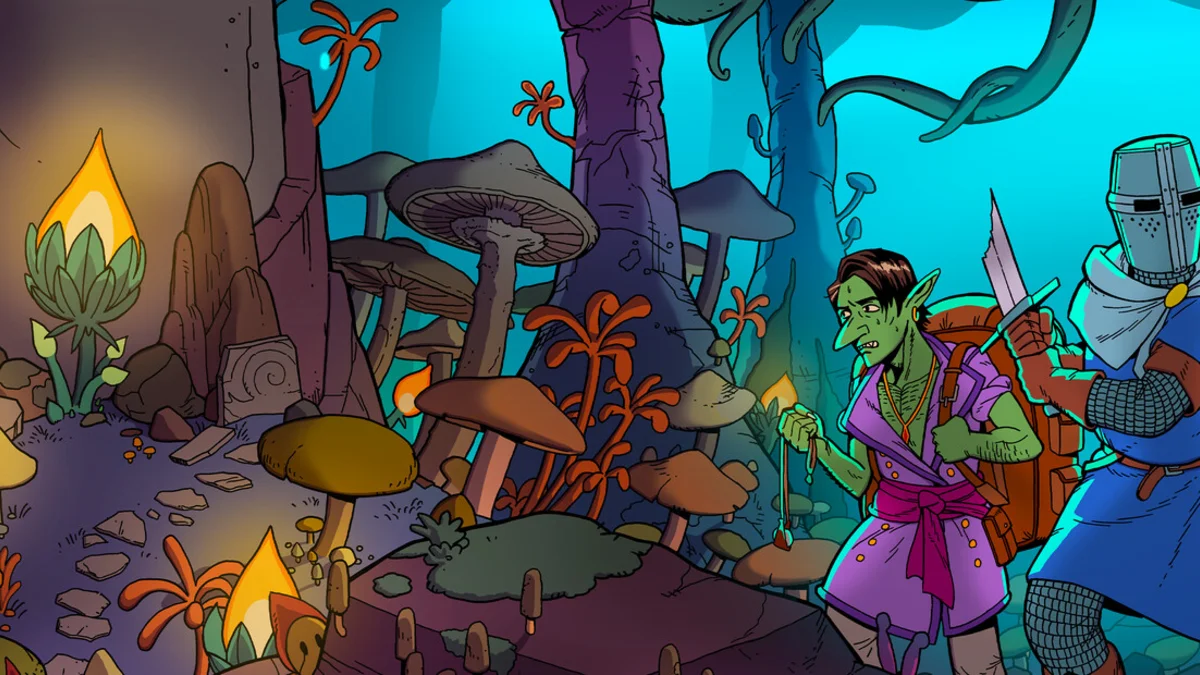
Esoteric Ebb is a stunning debut CRPG from Christoffer Bodegard — funnier than Disco Elysium, mechanically sharper than most of its peers, and home to one of gaming's great goblin companions.
Introduction
I did not expect Esoteric Ebb to break me the way it did. I booted it up on a Tuesday night expecting to play for an hour, see if the Disco Elysium comparisons held any water, and go to bed. I looked up at 3:47 AM and my goblin companion Grix had just talked me out of assassinating a minor noble by arguing, with genuine philosophical rigor, that the concept of "minor" nobility was itself a form of violence. I was hooked.
Let me be direct about the Disco Elysium question because everyone is asking it: yes, Esoteric Ebb earns that comparison. And in some specific ways — primarily comedy and pacing — it surpasses it. This is not a clone. Christoffer Bodegard has built something genuinely new here, something that wears its influences openly while carving out its own unmistakable voice. The dice mechanics, lifted lovingly from tabletop D&D tradition, create a layer of chaos that Disco Elysium's skill checks never quite had. You can fail spectacularly. You can also succeed in ways that feel cosmic and ridiculous and earned.
Esoteric Ebb is one of the best CRPGs ever made. That is where I land after 47 hours and two complete playthroughs. The story earns a 10. The mechanics earn an 8. The whole is considerably greater than the sum of its parts, and the parts are already exceptional.
Gameplay & Mechanics
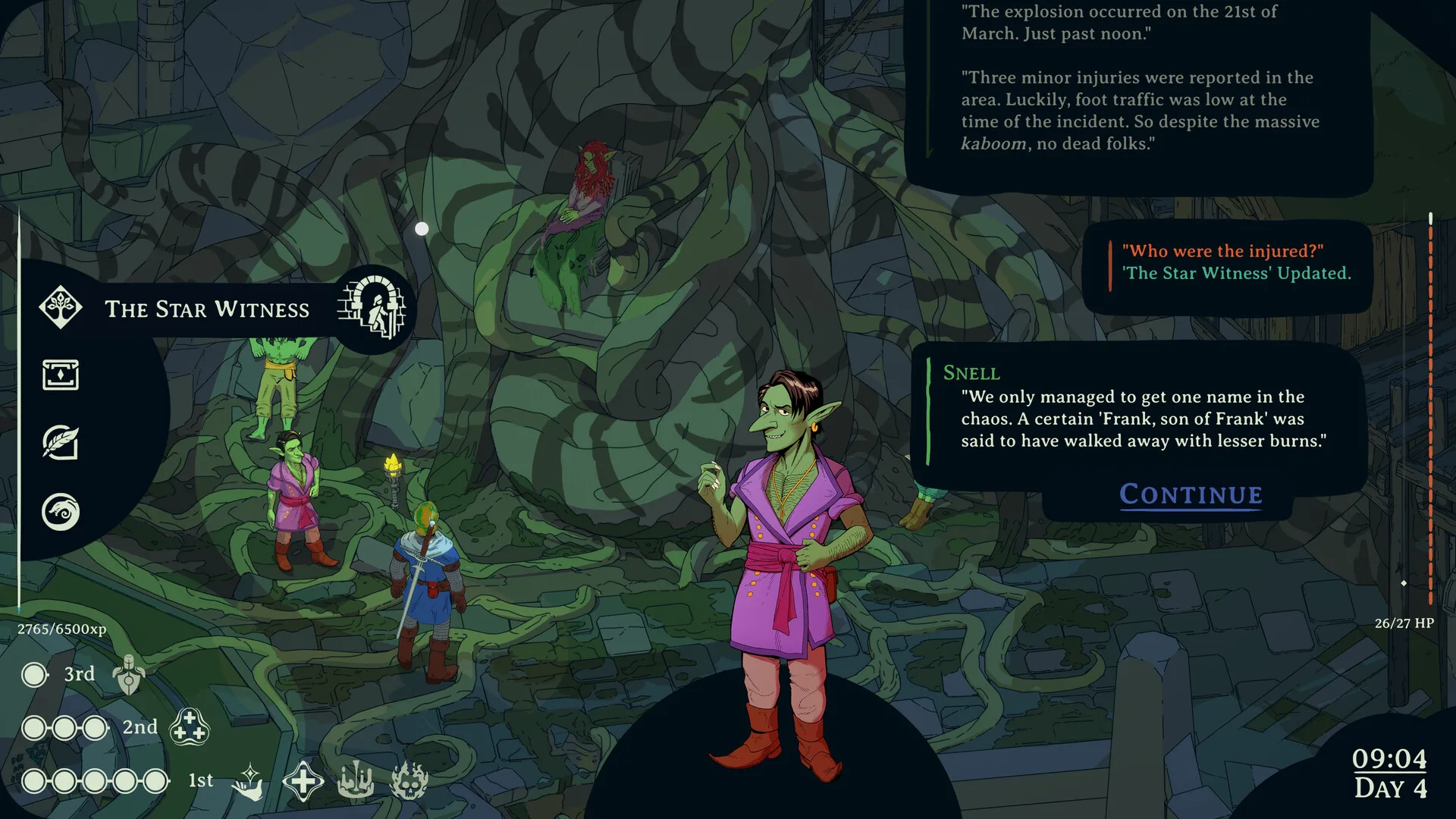
The core loop: you are an amnesiac investigator — again, yes, I know — dropped into a city called Amberveil that is quietly tearing itself apart at the political seams. You have stats spread across four pillars (Cunning, Presence, Vigor, Lore), and those stats determine which skill checks you can attempt and at what odds. Roll a d20. Pray. Watch the narrative branch accordingly.
What Bodegard gets right that so many tabletop-inspired CRPGs fumble is consequence. Failed checks do not brick quests — they redirect them. I failed a Presence check trying to charm a city guard, got arrested, and accidentally stumbled into a detention center subplot that became my favorite hour of the entire game. The dungeon master energy here is real. The world feels like it is genuinely improvising around you.
Grix, your goblin companion, participates mechanically as well as narratively. She has her own stat bonuses you can lean on, her own opinions about your choices, and a tendency to interject at the worst possible moments. During a tense negotiation with a cult leader, she whispered in my ear that the man's hat was "cosmically offensive" and offered to steal it. I let her. The entire room turned hostile. Worth it.
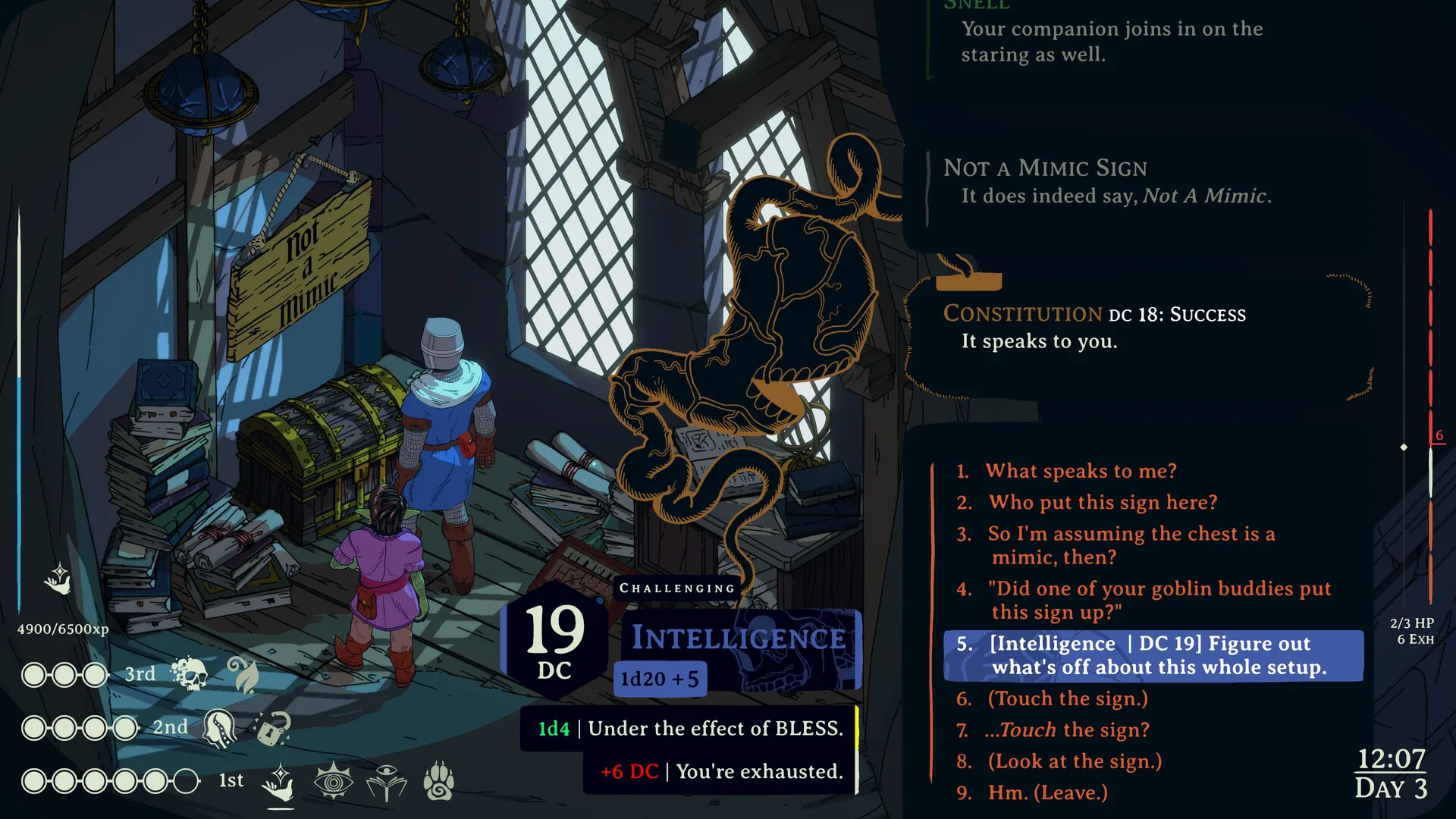
Combat exists but takes a back seat. This is fundamentally a game about talking, investigating, and making choices you cannot take back. The tactical elements in the few proper fight sequences are functional rather than deep — think Baldur's Gate Lite. Nobody is coming to Esoteric Ebb for the combat, and Bodegard seems to know this, keeping those sequences rare and relatively brief.
The system I want to highlight specifically is the Campaign Corruption mechanic. Certain choices accumulate what the game calls "Ebb" — a measure of how much you are unraveling the political conspiracy at the center of the plot versus becoming complicit in it. High Ebb pushes you toward the clerical path: a proper hero, a legend. Low Ebb opens up the saboteur route. My second playthrough, in which I systematically destroyed every alliance my first-run protagonist had built, felt like a completely different game. Not cosmetically different — structurally different. That is rare.
Graphics & Performance
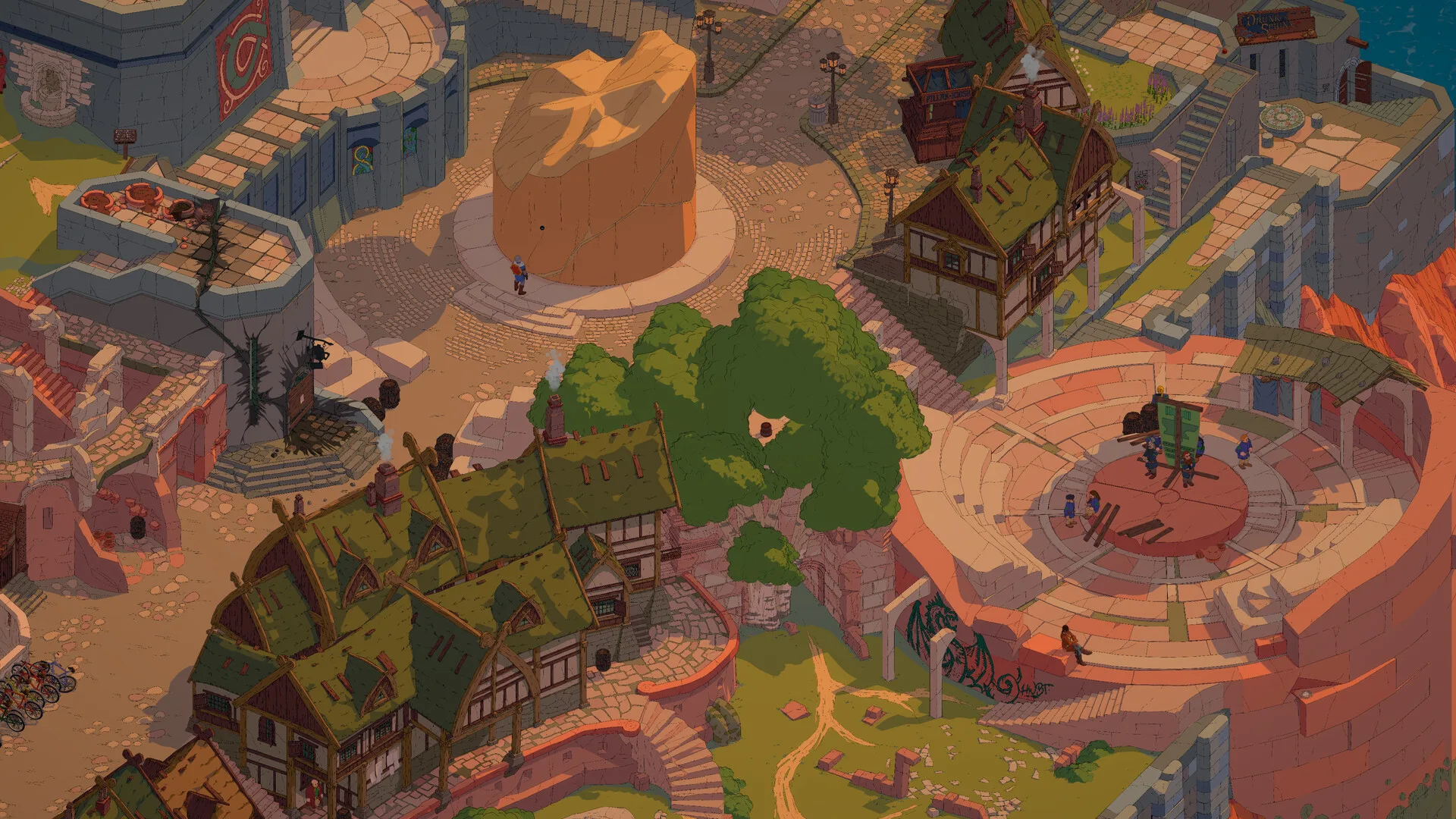
Visually, Esoteric Ebb runs with a painterly 2.5D aesthetic — hand-illustrated environments, expressive character portraits, UI elements that look like they were designed for an extremely stylish tabletop manual. It is charming. I want to be clear about that. The art direction has a coherent identity and executes it consistently across 30+ hours of content.
But it is not pushing any hardware. The character models, while characterful, are simple. Some environments recycle assets in ways that feel slightly rushed, particularly in the second act's dungeon sequences. For a game sitting at an 88 Metacritic, the visual ambition sits below what you might expect. This is an indie built by one primary creative voice, and those constraints are visible.
Performance is immaculate, though. Zero crashes across two full playthroughs. Load times are near-instant. The game runs at smooth framerates on hardware as modest as a five-year-old mid-range laptop. Bodegard clearly spent time optimizing, and it shows. No stutters, no memory leaks, no broken quest flags — the last point alone puts Esoteric Ebb ahead of several AAA CRPGs I could name.
Story & Narrative
This is where Esoteric Ebb becomes something special. The political conspiracy at its center — I will keep specifics vague — involves a faction of "Legend Shapers" who have been quietly rewriting historical memory to consolidate power in Amberveil. The setup sounds dry on paper. In practice it becomes a meditation on how power preserves itself, how truth gets eroded from the bottom up, and what it costs to tell the truth when the institutions around you have decided that lying is more convenient.
Heavy themes. Delivered through a script that made me laugh out loud at least a dozen times per session.
The comedy is the secret weapon. Not jokes in the ha-ha-here-comes-a-punchline sense, but genuine comic writing — timing, subverted expectations, the particular humor of characters who are completely sincere about absurd things. A bureaucrat who processes forms for "conceptual crimes." A tavern keeper who has been waiting for someone to solve a mystery for eleven years and cannot remember what the mystery was anymore. Grix arguing with a river about property rights. This stuff lands because the world takes it seriously. The comedy emerges from internal consistency, not from winking at the camera.
The multiple endings are genuinely earned. The cleric-of-legends path resolves the conspiracy through acts of public truth-telling that feel cathartic. The saboteur path ends in calculated catastrophe. Both feel like logical conclusions to the choices that led there. I cried at the end of my first playthrough. I felt cold and satisfied at the end of my second. A game that earns two different emotional registers across two playthroughs is doing something right.
Audio & Soundtrack
The score by composer Erik Nilsson (credited alongside Bodegard in the liner notes) earns its keep. Ambient pieces for exploration — woodwinds over plucked strings with occasional discordant notes that suggest something wrong just beneath the surface — do exactly what good CRPG ambient music should do: they recede into the background while shaping your emotional state without your noticing.
The combat music is the weakest element. Urgent but generic, the kind of percussion-heavy orchestral swell that could have been lifted from any mid-budget fantasy production. It does the job. It does not distinguish itself.
What distinguishes itself is the voice acting. Not every line is voiced — in a game of this length, that would have been impossible — but key story moments and companion dialogue are fully performed, and the quality is high. Grix's voice actor in particular deserves recognition: she plays the character with a deadpan pragmatism that makes every line land harder than it would on paper.
Value & Replayability
Forty to sixty hours for a first playthrough, depending on how deeply you engage with sidequests. The main path runs around 25-30 hours if you are focused. A second playthrough — particularly one aimed at opposing your first run's moral alignment — reveals enough new content to justify the full re-commitment.
At the price point Raw Fury has set ($24.99 at launch), Esoteric Ebb is frankly absurd value. The content-to-cost ratio beats games costing three times as much. The branching narrative means there is no single definitive playthrough, which sustains community discussion and content creation in ways that linear narratives cannot.
The one caveat: if you bounce off CRPGs with dense text and slow pacing, no amount of good writing will hold you. The first three hours require patience. They reward it, but they require it.
Final Verdict
Esoteric Ebb is a stunning debut. Christoffer Bodegard has made something that belongs in serious conversations about the best games of this decade, let alone this year. The writing is exceptional, the mechanics are thoughtfully designed, the goblin companion is immediately iconic, and the replayability is genuine rather than cosmetic.
It is not perfect. The visuals are modest, the combat is thin, and a handful of dice roll moments feel genuinely unfair. These are real criticisms. They are also irrelevant to the question of whether you should play it.
You should play it.
Buy if:You loved Disco Elysium, Planescape: Torment, or any CRPG where the writing is the main event. This is one of the best the genre has produced.
Skip if:You need robust combat systems or visual spectacle to stay engaged. Esoteric Ebb asks you to read and it does not apologize for that.
Pros
- Story and writing are an absolute masterclass — political conspiracy wrapped in genuine absurdist comedy
- The goblin companion is immediately one of gaming's most memorable sidekicks
- D&D-inspired dice mechanics give player agency real weight and consequence
- Incredible replayability — becoming a cleric of legends versus burning it all down are wildly different campaigns
- Performance is rock solid with zero crashes across 40+ hours
- Priced fairly for the sheer volume of content and branching narrative
Cons
- Skill check outcomes occasionally feel arbitrary — a few critical dice rolls can wall you out of key story beats
- The visual style, while charming, lacks the raw visual ambition of some CRPG peers
- Early hours throw mechanics at you faster than the tutorials can explain them
Frequently Asked Questions
- Is Esoteric Ebb like Disco Elysium?
- Very much so. Esoteric Ebb shares Disco Elysium's emphasis on narrative choice, skill-check-driven dialogue, and dense political writing. It adds D&D-style dice rolling for skill checks and a goblin companion system. Multiple reviewers consider it even funnier than Disco Elysium, and it stands comfortably alongside it as one of the best CRPGs of its kind.
- How long is Esoteric Ebb?
- A first playthrough focusing on the main story runs approximately 25-30 hours. Full sidequest completion pushes that to 40-50 hours. A second playthrough taking opposing moral choices reveals significant new content and typically runs 20-35 hours depending on familiarity with the systems.
- Does Esoteric Ebb have multiple endings?
- Yes, and they are substantially different. The Campaign Corruption mechanic tracks your moral alignment throughout the game, culminating in either the cleric-of-legends path (heroic resolution) or the saboteur path (catastrophic dismantling of the conspiracy). Both endings have distinct final sequences and emotional tones.
- Is Esoteric Ebb hard?
- Moderate difficulty. Combat encounters are relatively rare and manageable. The main challenge comes from dice roll skill checks — some critical checks can go wrong and significantly alter your story path. Failed rolls never end your run, but they can close off certain quests and open others. Resource management for dice bonuses adds light strategic pressure.
- Is Esoteric Ebb worth it on PC?
- Absolutely. At its launch price of $24.99, Esoteric Ebb offers exceptional value — 40+ hours of content with genuine replayability, rock-solid performance, and writing that rivals games costing three times as much. It currently holds an 88 Metacritic score and is widely considered one of the best indie RPGs released in 2026.
Game Info
- Developer
- Christoffer Bodegard
- Publisher
- Raw Fury
- Release Date
- 2026-03-03
- Platforms
- PC
- Genres
- RPG, Indie