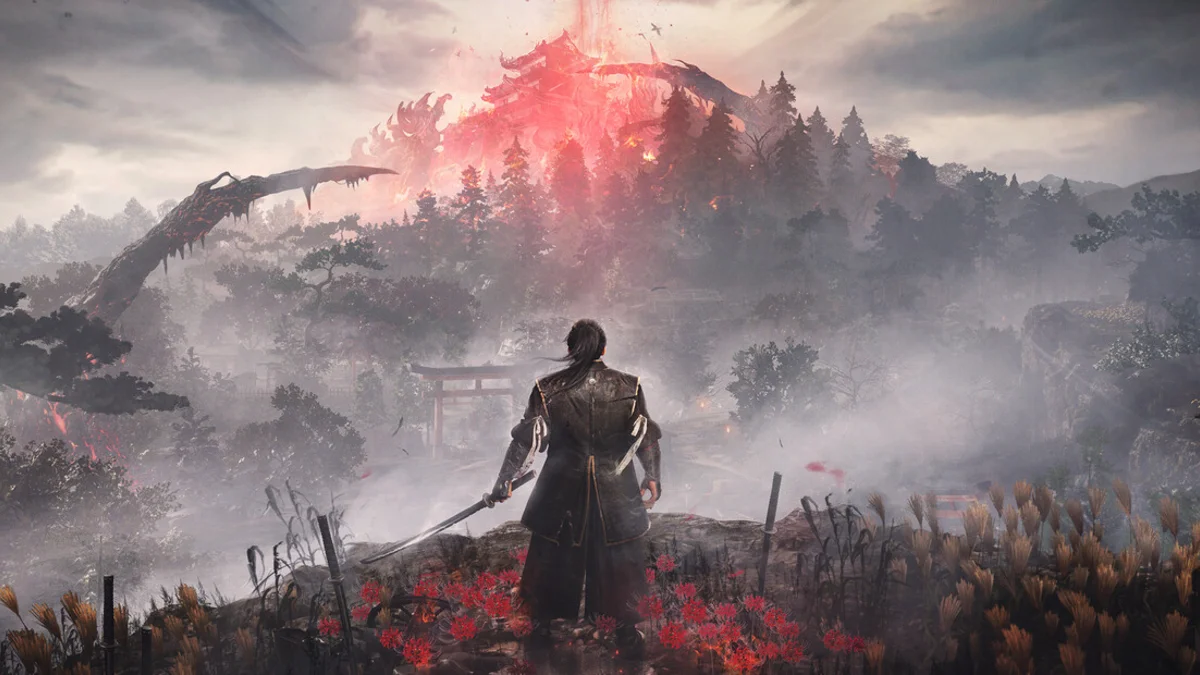
Nioh 3 Review: Team Ninja's Masterpiece Finally Arrives
Nioh 3 is the action RPG Team Ninja was always building toward — a brutal, deep, and surprisingly expansive Sengoku adventure that cements the series among the genre's elite.
Introduction
I almost missed Nioh 3's release window. Between the avalanche of January releases and the quiet February launch — always a graveyard slot in game publishing mythology — I'd mentally filed Team Ninja's next project under "get to it eventually." Then the Steam numbers hit: 88,000 concurrent players on day one. That's more than double what Nioh 2 ever saw. I downloaded it at midnight.
Forty hours later I surfaced, bleary-eyed and genuinely struggling to remember which century I was living in. Nioh 3 is that kind of game. It pulls you into its Sengoku-era nightmare and doesn't let you go, not because it's easy or comfortable, but because the moment-to-moment combat is so tactile, so electrically responsive, that walking away feels like a kind of withdrawal. Team Ninja spent six years refining their formula and the result is the most polished, most confident action RPG they've ever shipped.
This is not a perfect game. The story remains secondary to the action in ways that will frustrate narrative-focused players. The loot system still buries you in hundreds of near-identical katanas and gloves. But none of that matters when you're sixty feet in the air having just Ki Pulse-canceled out of a High Stance combo into a Ninja vanishing act, repositioning behind a Greater Oni before it can punish you. When Nioh 3 is firing, nothing else on the market touches it.
Gameplay & Mechanics
The headline new mechanic in Nioh 3 is the Playstyle Swap system — the ability to flip between a Samurai build and a Ninja build mid-combat, each with its own weapon set, Ki pool modifiers, and active skills. On paper it sounds like a quality-of-life addition. In practice it's a full redesign of how you approach every encounter in the game.
I spent my first twelve hours almost entirely in Samurai mode. The weight of a nodachi in High Stance, the crack of a Ki Pulse landing just as the glow fades from your last strike — this is the Nioh formula I knew, and it's better than ever. Stance switching remains one of action gaming's most underrated mechanics: High Stance for burst damage, Mid Stance for balanced play, Low Stance for speed and counter-opportunities. The muscle memory required to genuinely master it is real, and the game respects that investment.
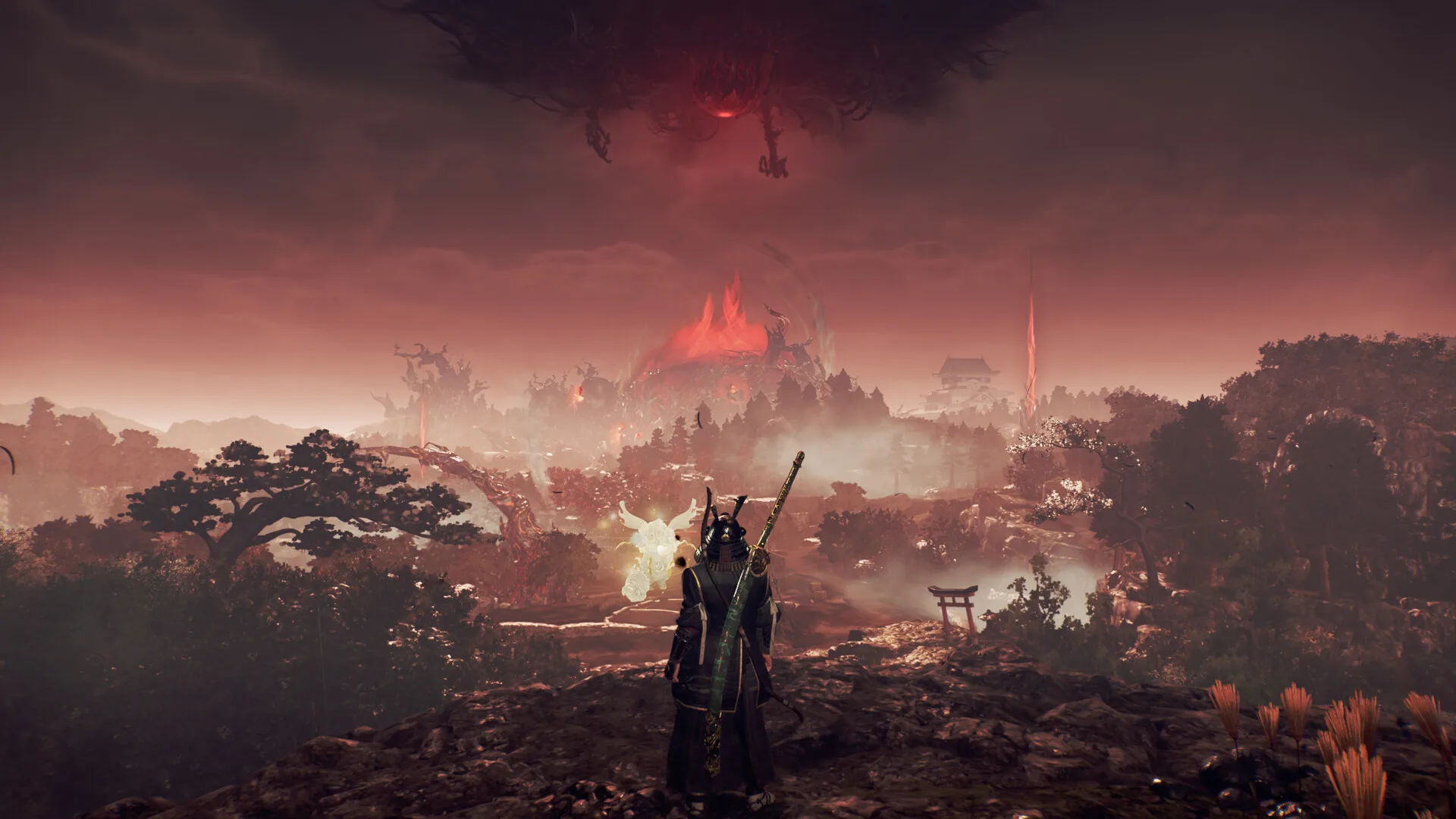
But Nioh 3 rewards players who eventually push into Ninja mode with something genuinely different. Where Samurai combat is about reading windows and punishing aggression, Ninja play is about creating pressure. Shurikens, smoke bombs, poison-laced kunai — you're constantly setting conditions for favorable exchanges rather than waiting for openings. The moment it clicked for me was against a fire-aspected Tengu boss about thirty hours in. I'd been bouncing off his second phase repeatedly in Samurai mode. Switched to Ninja, kited his flame pillars with a grapple skill, stacked poison, and got a clean two-phase clear. That adaptability is the point.
Ki management — always the series' central skill expression — has been deepened with new Pulse windows tied to Playstyle Swaps. A clean swap at the right moment restores a chunk of Ki from both pools. It's another layer on top of an already complex system, and yes, the learning curve is steep. Genuinely steep. I died forty-seven times to the third major boss before I understood what I was doing wrong. (Answer: I kept panicking and burning Ki on defensive rolls instead of trusting the Low Stance parry frame.) That death count never felt unfair. Every loss taught me something specific.
The level design deserves its own paragraph. Nioh has always had excellent levels, but they've historically been corridor-heavy — intricate mazes rather than true open areas. Nioh 3 breaks from that mold decisively. The game's castle and wilderness zones are larger, more interconnected, with branching paths, hidden sub-areas unlocked by yokai keys, and vertical traversal that the Ninja grapple makes genuinely useful. One mid-game level — a drowned castle district with water flowing through crumbled walls and kelp-draped yokai patrolling the ruins — had me spending two hours just exploring before I found the boss door. That's a compliment.
Graphics & Performance
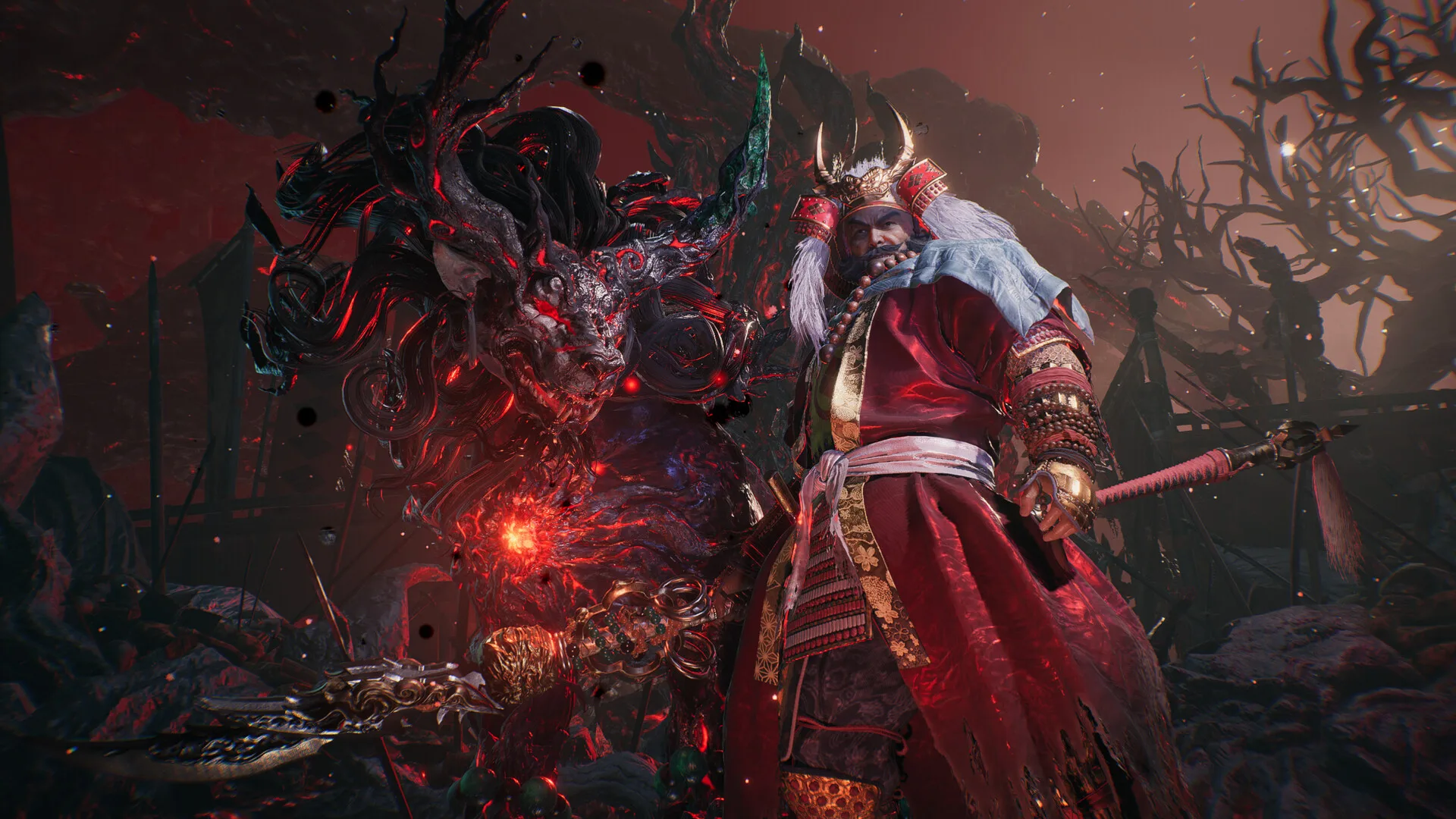
Nioh has never been a graphical showpiece and Nioh 3 doesn't change that. What Team Ninja prioritizes is art direction and environmental detail over polygon counts and ray-traced everything. This is a smart choice. The yokai enemy designs are extraordinary — the creature variety is the best in the series, ranging from pathetically grotesque minor enemies you'll almost feel bad murdering to genuinely beautiful boss designs that border on mythological art. The Gashadokuro variant in the Osaka campaign is genuinely one of the best-looking video game monsters I've seen in years.
The lighting system, particularly in darker environments, creates atmosphere through contrast rather than technical precision. Torchlit shrines cast deep shadows. The realm-shifting sequences — when the world flips from historical Japan to the Dark Realm — use a color grading shift toward deep purples and acidic yellows that communicates danger instantly. It's craft over spec.
Performance is mostly solid. On PS5, the game runs at a locked 60fps in Performance Mode with occasional sub-60 dips during the most particle-heavy boss explosions. Action Mode pushes toward 120fps on compatible displays and is where the game truly sings — the difference between 60 and 120 in a Ki Pulse-dependent game is not subtle. The PC version at launch had some stuttering issues in DirectStorage handoff during level transitions that a day-one patch partially addressed. At ultra settings with DLSS Quality enabled on a mid-range GPU I saw dips into the low 50s during dense outdoor encounters. High settings runs clean.
Story & Narrative
Here's where I'll be honest: if you're playing Nioh 3 for the story, you're going to have a rough time. Not because the narrative is bad, exactly — it's more that it assumes a level of familiarity with Sengoku history, series lore, and yokai mythology that most Western players simply won't have going in. The game opens in the middle of a political crisis involving characters introduced in supplementary materials, and never really slows down to explain itself.
The protagonist — a shinobi of ambiguous loyalty serving a fractured coalition of warlords — is deliberately opaque. This is a design choice. You're meant to project onto them. Some players will appreciate the freedom. I found myself wishing, about twenty hours in, that the game would just show me why I should care about the central conflict beyond "stop the yokai apocalypse."
What saves the narrative are the side missions. These shorter vignettes — built around specific historical figures, folklore encounters, and yokai mythology — have a tonal flexibility the main quest can't manage. A mission about a grieving samurai who made a pact with a fox spirit is genuinely moving. A mission that's basically Team Ninja winking at the absurdity of the series' own lore made me laugh out loud at my desk at 2am. The main story is functional. The side missions are where the writing has a heartbeat.
Audio & Soundtrack
The sound design in Nioh 3 is doing serious work. The Ki Pulse audio feedback — that crack-and-ring when you land it — is one of the most satisfying recurring sounds in action gaming. It's been refined over three games and it's perfect. The weight differential between stances communicates through audio as much as animation: High Stance attacks boom, Low Stance cuts slice with a higher-frequency sharpness. You can hear the difference before you see it.
The soundtrack leans heavily into traditional Japanese instrumentation with electronic underpinnings in boss fights. The main theme is built around shakuhachi flute and taiko, which sounds like every other Sengoku game until you hit a boss fight and the arrangement adds distorted shamisen and synth layers that escalate with the fight phases. It's not subtle, but it works. The Dark Realm music, a separate suite of tracks that play during the hardest encounters, is genuinely eerie — drones and dissonant strings that create ambient dread without being distracting.
Voice acting is strong across both English and Japanese tracks. The English dub has improved notably since Nioh 2, with the supporting cast in particular giving performances that add texture to characters who appear briefly. The Japanese track is excellent if you prefer it, though some of the translated subtitle work loses nuance in historical dialogue.
Value & Replayability
Nioh games have always been content-rich and Nioh 3 continues that tradition aggressively. The main campaign runs 40-50 hours for players who engage with the side missions, and that's before you touch the endgame. Nioh's endgame — the Dream of the Samurai / Dream of the Ninja difficulty tiers, the weapon and armor optimization grind, the rotating Twilight Missions — has historically been a game within the game, and Nioh 3 adds co-op Expedition mode that makes that endgame far more approachable than previous entries.
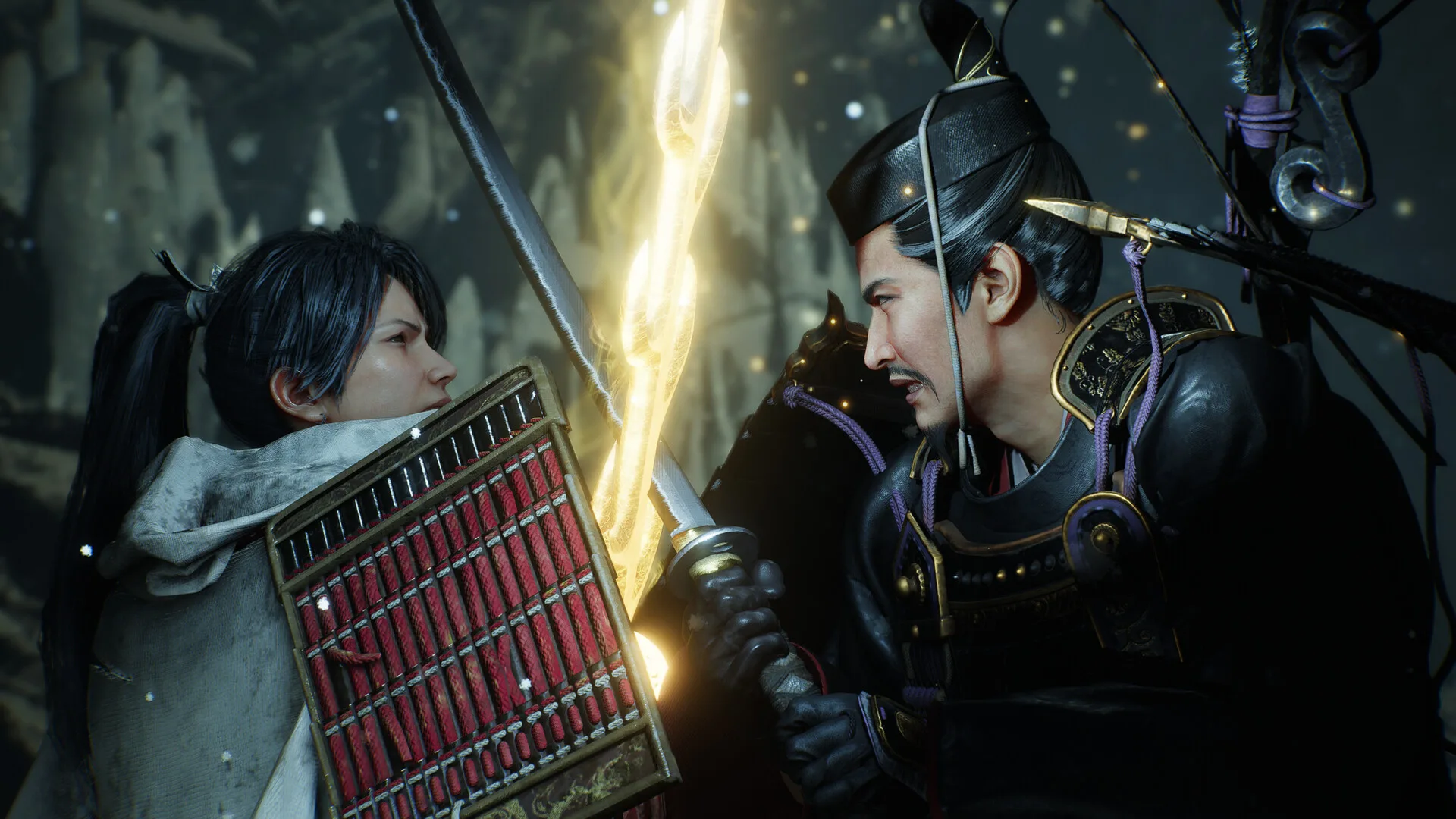
Expedition works through a seamless matchmaking system where you and a partner can join each other's worlds at nearly any point in the game, not just at boss fog gates. It changes the dynamic significantly. Some of my best moments with Nioh 3 came from late-night Expedition sessions where a random player joined my world and we spent an hour systematically clearing a legacy mission together without ever exchanging a word — just the shared language of Ki Pulses and revive gestures.
The Summon Visitor system for boss fights returns from Nioh 2 and remains excellent for players who want help without committing to a full Expedition. The Companion AI (the series' NPC assist system) has also been improved, with companions that actually manage their Ki and switch stances contextually rather than rolling at the boss until they die.
Build depth is extraordinary. The interaction space between Guardian Spirits, Soul Cores, weapon skills, and now the Samurai/Ninja playstyle split means the number of functional, interesting builds is essentially infinite. I found a poison-stacking Ninja build that synergized with a specific set bonus from Ninja clan armor and an Umi-bozu Soul Core that I spent three days iterating on. This is the kind of game where Reddit min-maxers will be publishing build guides eighteen months from now.
Final Verdict
Nioh 3 is Team Ninja's best game. Full stop. The Playstyle Swap system doesn't just add variety — it fundamentally changes how you engage with the combat at every level, from build planning to second-to-second decision-making. The level design is the most ambitious the series has attempted. The boss roster is exceptional. And the co-op integration finally makes Nioh's notoriously punishing endgame feel like something you can share with friends rather than suffer through alone.
The story will not win awards. The loot system remains cluttered. The PC performance at launch needed patches it only partially received. None of this changes what Nioh 3 actually is: one of the deepest, most rewarding action RPGs of the decade. Eighty-eight thousand people launched it simultaneously on Steam on day one. Most of them were right to.
If you've bounced off previous Nioh games because of the difficulty, Nioh 3 won't convert you — it's still brutally demanding. But if you've ever wanted a soulslike with the mechanical depth of a fighting game and the content volume of an MMORPG, this is your game. I'll be playing it for months.
Pros
- Samurai/Ninja playstyle swapping adds a new layer of strategic depth to every encounter
- Combat feels impossibly refined — Ki Pulse timing rewards mastery like nothing else on the market
- Level design is the most ambitious in the series, with open areas that still feel handcrafted
- Online co-op via Expedition mode works seamlessly and makes late-game content genuinely enjoyable
- Content density is staggering — easily 80+ hours before you've seen everything
- Boss fights are some of the most inventive and visually spectacular Team Ninja has ever designed
Cons
- The story is presented in such a lore-dense way that newcomers will feel completely lost
- Some performance dips during outdoor combat-heavy sequences, particularly on PC at ultra settings
- Loot system still buries you in near-identical gear drops that require excessive sorting
- Ninja playstyle feels slightly underpowered in direct comparisons to Samurai until late-game unlocks
Frequently Asked Questions
- Is Nioh 3 open world?
- Nioh 3 is not a traditional open world game, but its levels are significantly more expansive and interconnected than previous entries in the series. Think of it as large, handcrafted zones with multiple branching paths and hidden sub-areas rather than a seamless open world. There's no open overworld to explore freely between missions — you still select levels from a mission map — but within each level the exploration space is much larger than Nioh 1 or 2.
- How does Nioh 3 compare to Elden Ring?
- Nioh 3 and Elden Ring are both action RPGs in the soulslike genre but they prioritize very different things. Elden Ring excels at open-world exploration, environmental storytelling, and a gradual difficulty curve. Nioh 3 focuses intensely on combat depth — the Ki Pulse system, stance switching, and the new Samurai/Ninja playstyle swap create a mechanically dense experience that rewards mastery in ways Elden Ring doesn't attempt. Nioh 3 is harder moment-to-moment but also more immediately gratifying when you've learned the systems. If you want exploration and atmosphere, Elden Ring. If you want pure combat depth, Nioh 3.
- Does Nioh 3 have multiplayer co-op?
- Yes. Nioh 3 has two co-op systems: Summon Visitor (invite another player to help with a specific boss or section) and Expedition Mode (seamless co-op where you and a partner can join each other's worlds at almost any point in the game). Expedition Mode is new to Nioh 3 and is a significant improvement over the co-op in previous entries, making the endgame grind in particular much more enjoyable with a partner.
- Do I need to play Nioh 1 and 2 before playing Nioh 3?
- You don't need to have played the previous games to enjoy Nioh 3's gameplay, but the story will be significantly harder to follow without that context. Nioh 3 assumes familiarity with the series' historical fiction framing, key recurring characters, and lore concepts. If you're new to the series, the gameplay is still fully accessible — the tutorial covers all the mechanics — but the narrative will feel opaque. Playing Nioh 2 first is recommended for story context, though not strictly required.
- How long is Nioh 3?
- The main campaign with side missions takes most players 40-50 hours to complete. However, Nioh games are designed around an extensive post-game — the Dream difficulty tiers, rotating Twilight Missions, and build optimization grind can easily add another 60-100+ hours for dedicated players. The Expedition co-op mode also adds significant longevity. Players who want to see and do everything in Nioh 3 should expect to invest 100+ hours.
Game Info
- Developer
- Team Ninja
- Publisher
- Koei Tecmo
- Release Date
- 2026-02-06
- Platforms
- PC, PS5
- Genres
- RPG, Action