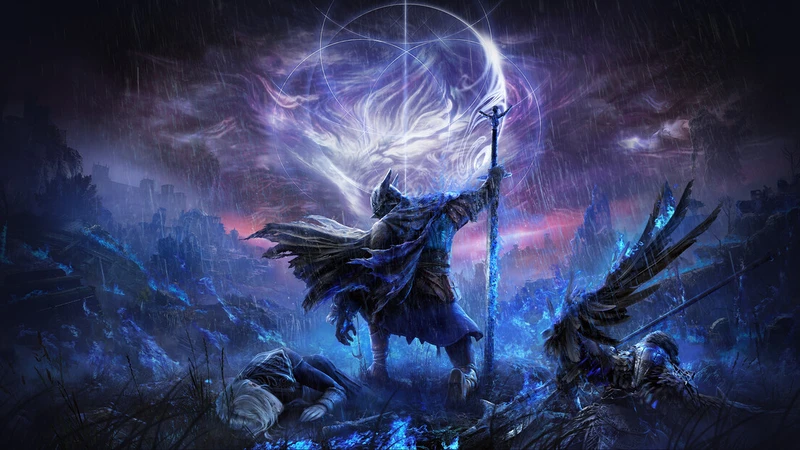
Elden Ring: Nightreign Review: A Bold Co-op Gamble
FromSoftware's roguelike co-op spinoff transforms Elden Ring's combat into a time-pressured 45-minute gauntlet where squads of three race against an encroaching darkness. It's inventive and addictive when you've got the right teammates, but solo players and those without a dedicated group will find themselves frustrated.
Introduction
After spending 70+ hours with Elden Ring: Nightreign, I can say with certainty that FromSoftware has created something special – but it's special in a way that demands you play it a very specific way. This isn't a game for solo adventurers or casual multiplayer dabblers. Nightreign is a three-player roguelike that swallows 45 minutes of your evening in a single gulp, and whether you'll love or hate it depends entirely on whether you've got two friends willing to make that commitment repeatedly.
Set in an alternate Lands Between where the Night arrived instead of grace, you take on the role of a Nightfarer – one of eight distinct classes – tasked with surviving three in-game days and nights while building strength to face Heolstor, the Nightlord himself. It's a premise that sounds straightforward until you're staring down your fifth consecutive wipe on the final boss, knowing your team made three tiny positioning mistakes in the last 30 seconds.
Gameplay & Mechanics
The core loop is what keeps you coming back. You drop into a procedurally-varied map, level up by farming Runes during daytime cycles, face random bosses when night falls, and gradually unlock permanent passive upgrades called Relics between expeditions. Each run takes 35–45 minutes, which is the sweet spot: long enough to feel like an accomplishment, short enough that failure doesn't feel like a time waste. I've never had a run where I checked my watch; I've only had runs where I looked up and realized three hours had passed.
The genius here is that progression feels real. Unlike some roguelikes that throw you back with nothing, every failed expedition nets you Murk currency and new Relics that unlock stat bonuses, ability modifications, or class-specific perks. I found myself chasing specific Relic combinations – stacking crit damage with the Duchess class's assassination abilities, or buffing the Guardian's shield capacity for tank-heavy compositions. This creates a meta-layer that encourages experimentation without forcing a single dominant strategy.
Where Nightreign truly excels is co-op combat synergy. The eight classes aren't balanced for solo play; they're designed around three-person teams. The Guardian becomes a genuine tank when one player commits to damage mitigation. The Duchess's ultimate ability – making your entire squad invisible for eight seconds – transforms into clutch boss damage phases when coordinated properly. I've had moments where perfect class synergy felt like a dancing routine: each player knew their role, and the fight became this beautiful sequence of ultimates and crowd control. Those moments are worth the $40 alone.
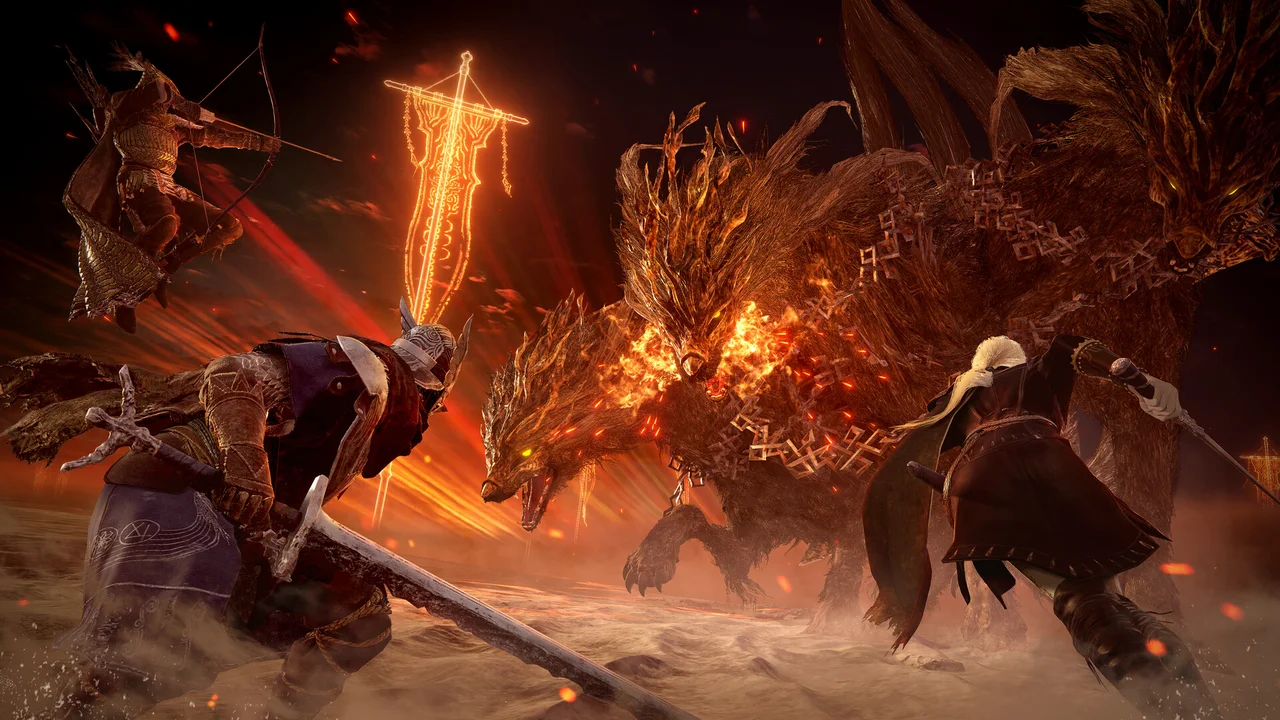
The Night's Tide mechanic – a shrinking purple barrier that pushes players toward the center – adds meaningful tension. Unlike traditional battle royale damage, the Tide forces map knowledge; veterans know where the safe zones will close, while newer players panic and scatter inefficiently. It's a small design choice that impacts strategy significantly.
That said, the difficulty scaling is brutal. Without a premade squad, you're stuck with random matchmaking – and without in-game voice communication, callouts are impossible. I've had runs fail because teammates didn't understand which boss patterns required repositioning, or didn't realize the Duchess had an ultimate ready. The game assumes perfect coordination; it doesn't forgive you for having random teammates.
Graphics & Performance
Visually, Nightreign is serviceable but underwhelming for a 2025 release. The art direction carries weight – the Lands Between's gothic aesthetic translates well to Nightreign's darker tone, and the Nightlord's design is genuinely unsettling. But the technical execution falls short of expectations.
On PC, this is a bare-bones port that inherits Elden Ring's optimization problems while solving none of them. The game is locked at 60 FPS with no upscaling, frame generation, or even DLSS support. On an RTX 4090 with a Ryzen 9 7950X, I experienced persistent microstutters – 20–50ms hitches that interrupted exploration, even though I wasn't GPU-bottlenecked. Grass quality is the heaviest setting, which feels ironic given that grass isn't particularly detailed. The game is CPU-bound by design, refusing to utilize modern GPU features.
Console performance is more consistent; PS5 and Xbox Series X maintain 60 FPS with minimal hiccups. The visual quality is adequate – texture work is decent, lighting is atmospheric – but it doesn't push hardware. You're not buying this for the graphics showcase; you're buying it for the gameplay loop.
Story & Narrative
The narrative is Nightreign's weakest component. The setup is interesting: rather than the Tarnished being guided by grace, the Night descended and brought the Nightlord with it. The Roundtable Hold summons Nightfarers to fight back. That's genuinely compelling worldbuilding for a spinoff.
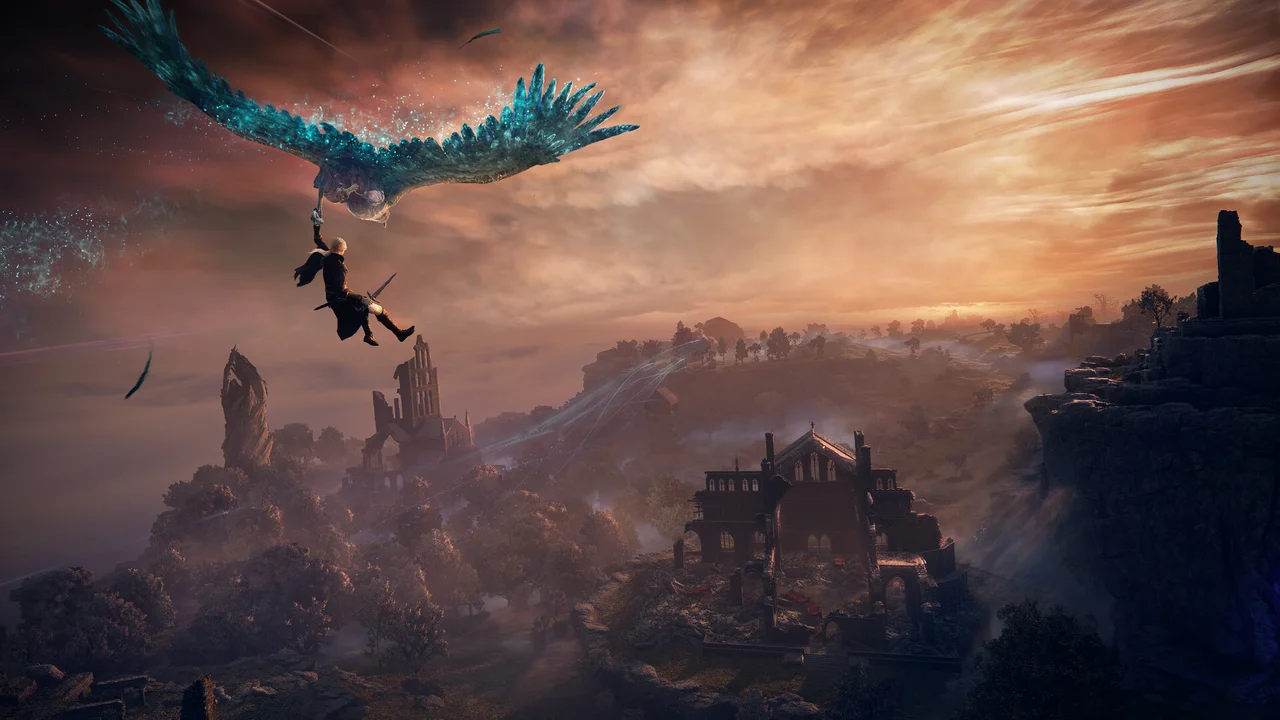
But the execution is frustratingly sparse. The story exists almost entirely in item descriptions and environmental dialogue snippets. You'll finish 70 hours of gameplay and still barely understand who the Nightfarers are, why the Nightlord exists, or what defeating them actually accomplishes. There are no character arcs, no cutscenes that develop the narrative, no memorable NPCs. It's all surface-level Souls lore drops that assume you've already read the wiki.
The Nightlord fight itself is thematically solid – a shape-shifting cosmic horror that punishes poor positioning – but the victory feels hollow because you never felt connected to the world you were saving. The ending acknowledges you won, but doesn't explore the consequences. It's the narrative equivalent of a victory screen; technically there, but narratively forgotten by the time you start your next run.
Audio & Soundtrack
The sound design is where Nightreign quietly impresses. The ambient audio – the Tide's ominous growl, the nighttime creature sounds, the haunting silence of an empty section of map – creates genuine dread. When night falls and you hear those boss music cues, your heart rate actually climbs.
The soundtrack is orchestral and appropriately dark, though it doesn't reach the memorable heights of Elden Ring's original score. Boss themes are serviceable; the Nightlord's theme is genuinely memorable with its reality-bending sound design. But you'll hear these tracks dozens of times across 70 hours, and they become background noise faster than you'd expect.
Voice acting is minimal – mostly grunts and confirmations from teammates. There's no dialogue, which is fitting for a co-op game that prioritizes callouts over narrative.
Value & Replayability
At $40, Nightreign is priced aggressively compared to its scope. You're looking at 40–60 hours of content if you push to unlock all Relics and try every class composition. For a roguelike, that's substantial. The progression loop doesn't feel like artificial padding; you genuinely want to unlock the next Relic or push deeper into a harder expedition.
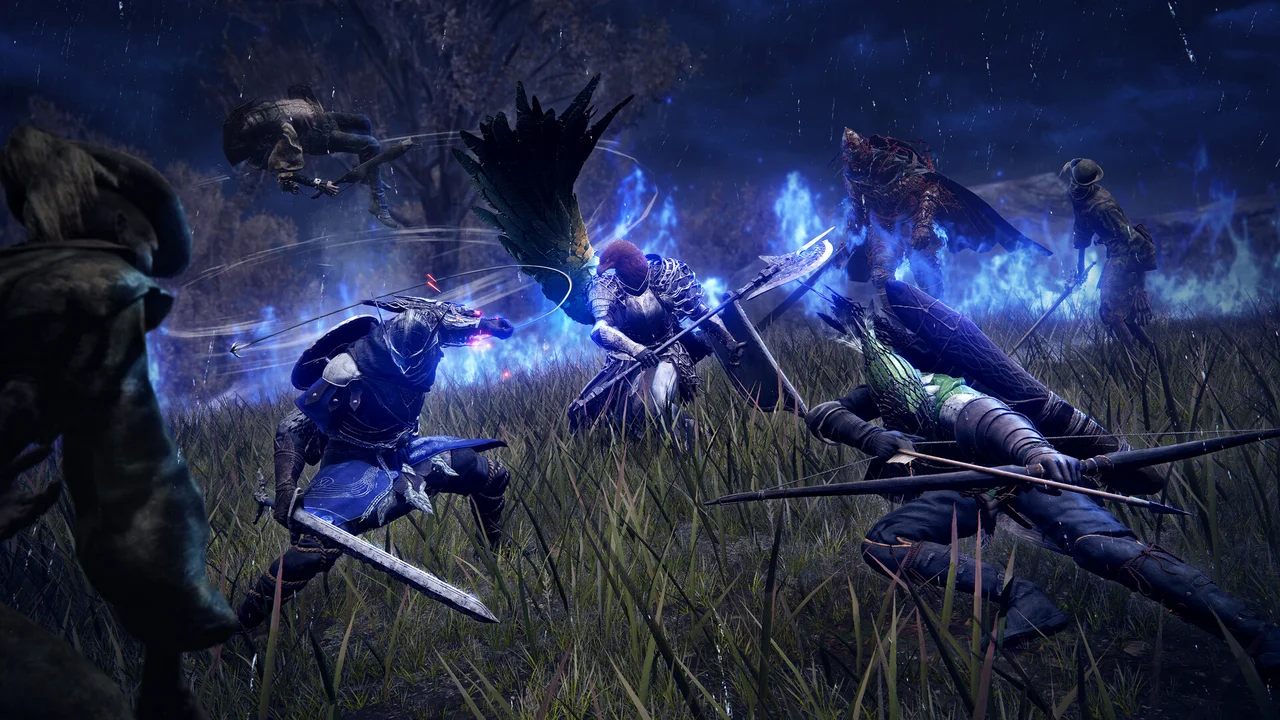
Replayability has a hard ceiling, though. After 70 hours, I've seen most boss combinations, most map layouts, and most meaningful Relic synergies. The procedural generation is good but not infinite; the randomization starts feeling like shuffled combinations rather than genuinely novel situations. The game shines during those first 40 hours when every run feels fresh. By hour 60, you're chasing specific Relic drops and meta builds, and the game becomes more of a grind.
The lack of ranked matchmaking, seasonal content, or post-launch content roadmap is concerning. There's no roadmap mentioned, no mention of DLC plans beyond vague possibilities. As a $40 roguelike without live service elements, Nightreign feels complete but finite.
Final Verdict
Elden Ring: Nightreign is a brave experiment that mostly works – but only if you meet its specific requirements. The roguelike structure is addictive, the co-op combat is genuinely strategic, and the 45-minute loop is perfectly tuned for extended play sessions. The Relic progression system makes failure feel productive, and the class synergies create emergent gameplay moments that rival the best of FromSoftware's design.
But the cracks show quickly if you try to play solo or with inconsistent teammates. The PC port's performance issues are unforgivable for a 2025 release. The narrative is forgettable. And the replayability ceiling exists; you'll hit it around hour 60.
Nightreign is a 7/10 because it executes its core vision with precision, but that vision is deliberately narrow. It's not Elden Ring Lite – it's a entirely different game that just happens to share the same universe and combat fundamentals. If you've got a squad of three friends who want a roguelike to grind together, Nightreign is an easy recommendation. If you're a solo player or anyone without a dedicated co-op group, the friction of matchmaking and communication will outweigh the gameplay appeal.
Buy if: You have a consistent trio of friends ready for 45-minute co-op runs; you love roguelikes; you want to master FromSoftware's combat in a condensed, repeated format; you value class synergy and team strategy over narrative.
Skip if: You primarily play solo; you don't have reliable co-op partners; you're on PC and performance stability matters to you; you expect a deep narrative experience; you're burned out on roguelike loops after Hades II or similar titles.
Pros
- Exceptional roguelike structure fuses perfectly with FromSoftware's combat design – the loop never feels stale across 50+ hours
- Co-op combat feels genuinely coordinated and strategic; class synergies reward team composition choices in meaningful ways
- Eight distinct Nightfarer classes with unique ultimate abilities create diverse playstyles and party strategies
- Progression through Relics provides satisfying permanent upgrades that make subsequent runs feel genuinely stronger
- $40 price point is generous for a 40-hour roguelike with high replayability and co-op focus
- Battle royale shrinking arena (Night's Tide) creates escalating tension and forces smart decision-making about map positioning
Cons
- Requires three coordinated players; solo play is brutally scaled and borderline unplayable without significant struggle
- No crossplay or duo matchmaking makes finding random teammates friction-heavy; in-game voice chat is nonexistent
- PC port suffers from persistent microstutters and 60 FPS cap despite high-end hardware; lacks DLSS or frame generation
- Narrative is sparse and forgettable; character development relies entirely on item descriptions and environmental storytelling
- Repetition wall hits hard after 60+ hours; most enemy types, bosses, and map variations become predictable despite roguelike randomization
Frequently Asked Questions
- Can I play Elden Ring: Nightreign solo?
- Technically yes, but the game is balanced around three-player co-op and solo play is significantly harder. Enemies and bosses don't scale down for solo players, making progression slow and frustrating. FromSoftware designed this with teams in mind, so if you don't have two friends, you'll need reliable matchmaking partners.
- Do I need to have played Elden Ring to understand Nightreign's story?
- No, but it helps. Nightreign's narrative is parallel to the main Elden Ring; both occurred after The Shattering, but diverge significantly from there. You'll recognize enemies, locations, and lore concepts, but the story stands independently. That said, the narrative is sparse regardless; most story exists in item descriptions.
- What's the difference between Nightreign and a traditional roguelike like Hades II?
- Nightreign emphasizes strategic team composition and class synergy over individual character builds. Each of your eight classes has distinct roles (tank, ranged DPS, support), and the game rewards coordinated play. The 45-minute expedition length also encourages efficiency over exploration, creating a different pacing than roguelikes like Hades.
- Are there microtransactions or battle pass?
- No. Nightreign is a one-time $40 purchase with no battle pass, seasonal content, or pay-to-win mechanics. Murk currency (earned in-game) can be spent on cosmetic skins or Relic rolls, but everything is earnable through gameplay.
- How long is a typical run, and how much total playtime should I expect?
- A single expedition takes 35–45 minutes depending on pacing. Most players reach 40–50 hours before experiencing the repetition wall, and 70+ hours to unlock most Relics. After that, the grind becomes more predictable unless you're chasing specific meta builds.
Game Info
- Developer
- FromSoftware
- Publisher
- Bandai Namco Entertainment
- Release Date
- 2025-06-27
- Platforms
- PC, Xbox Series X|S, PS5
- Genres
- RPG