
Mewgenics Review: Edmund McMillen's Most Ambitious Game Yet
After 14 years of development hell, Mewgenics is finally here — and Edmund McMillen's cat-breeding roguelike is a deliriously deep, darkly funny triumph that earns every moment of the wait.
Introduction
Mewgenics was announced in 2012. I was seventeen. I am not seventeen anymore.
In the intervening fourteen years, the game was cancelled, rebooted, cancelled again, shown at PAX in a build that looked nothing like what shipped, and eventually just went quiet for years at a stretch. Edmund McMillen — the co-creator of Super Meat Boy and the solo developer of The Binding of Isaac — has never been known for conventional production timelines. But Mewgenics tested even his most devoted fans. The running joke in certain corners of games Twitter was that it would ship alongside Half-Life 3 and a stable version of CyberConnect2's proprietary engine.
Then, on February 10, 2026, it just appeared on Steam. $19.99. No press embargo. No review copies sent in advance. McMillen posted a single image of a cat with three eyes and the caption "it's done" and that was the announcement. A million people bought it in the first week.
They were right to. Mewgenics is extraordinary. It's also strange, occasionally impenetrable, and absolutely not for everyone. But as a statement of what a small team with singular vision can build — and as a roguelike with more genuine systemic depth than anything I've played since the early Binding of Isaac expansions — it earns every superlative that's been thrown at it. The wait was worth it. I'm not sure it was worth fourteen years, but it was worth it.
Gameplay & Mechanics
Let me try to explain Mewgenics, which is something like explaining what an octopus feels like to someone who has only ever touched a dog. It's a roguelike. It's a tactical strategy game. It's a cat breeding simulator with actual genetic inheritance mechanics. It's a collection game. It's a deck builder, sort of, except the deck is a colony of mutant cats and the cards are their personalities. None of these descriptions are wrong and none of them capture it.
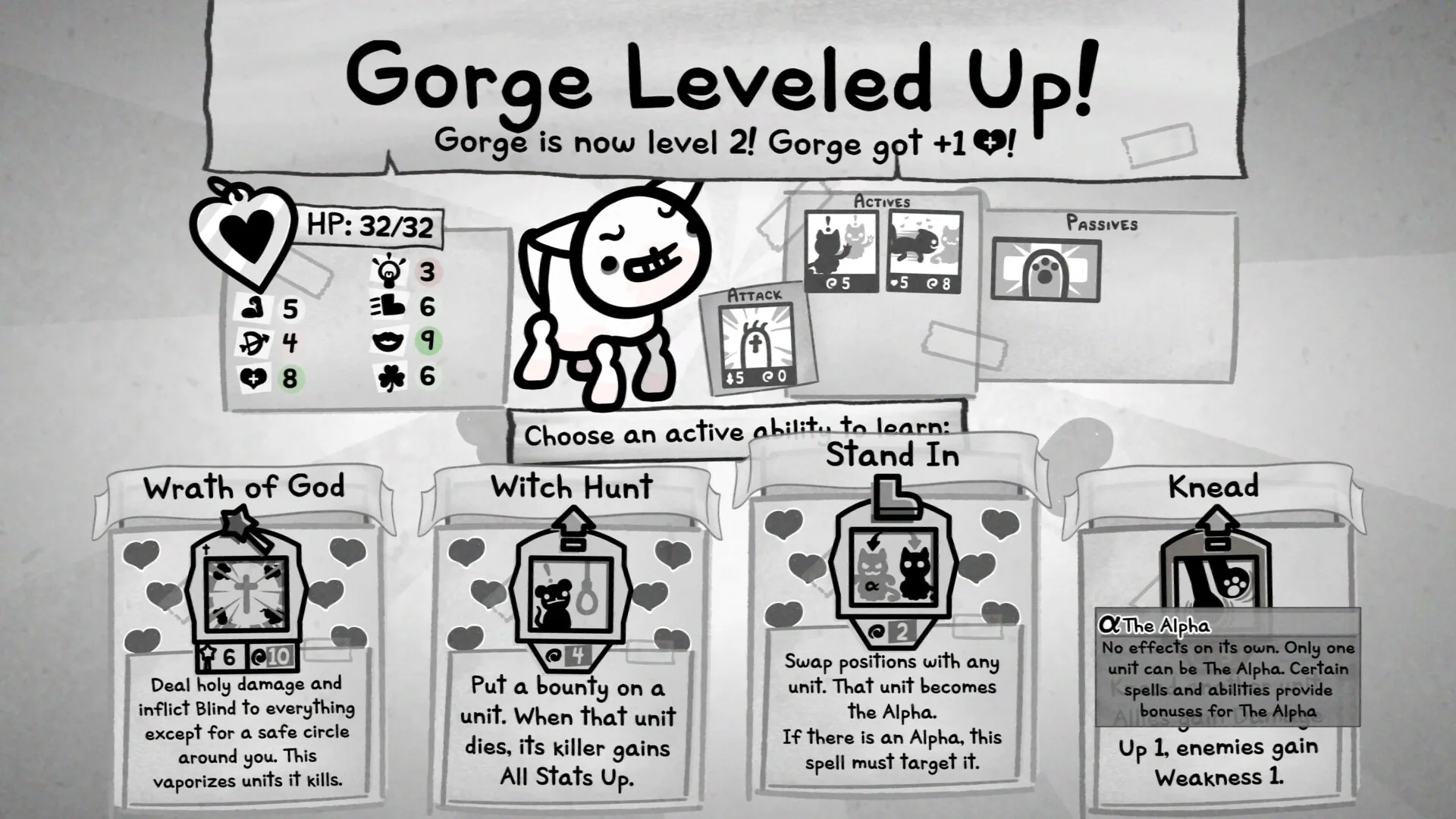
You start each run with a small number of cats. Each cat has a breed-type, a set of active and passive abilities tied to that type, a personality trait that affects how they behave in combat and how they interact with other cats, and a genetic profile — dominant and recessive alleles for appearance, ability expression, and mutation chance. This is not metaphorical. The game has an actual simplified Mendelian genetics model running under the hood. Breed a Tabby with high aggression stats to a Siamese with a rare passive heal ability and there's a real probability distribution governing what the kittens inherit.
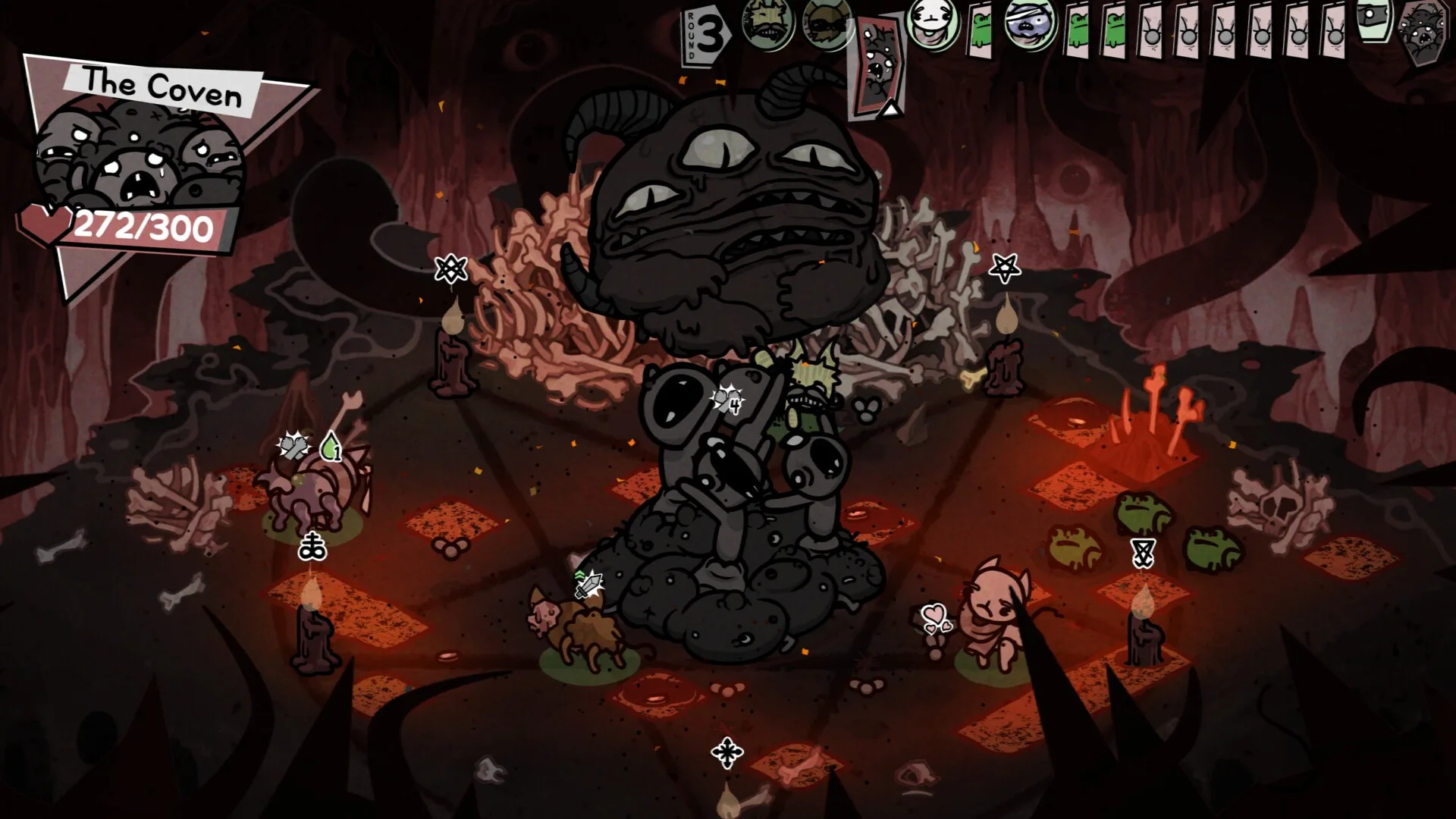
I spent four hours in a single run doing nothing but breeding experiments after I discovered that a specific pairing — a three-legged cat with a poison passive and a near-blind cat with extremely high speed — had a roughly 25% chance to produce offspring that inherited both traits simultaneously. The resulting cats were absurd. One of them, a scraggly grey kitten I named Pustule, cleared an entire boss encounter alone by cycling through every enemy with AOE poison at a speed no attack could track. I've played a lot of roguelikes. I've never felt a moment of systemic discovery quite like watching Pustule dismantle a mid-game boss before I'd even taken a turn.
Combat is turn-based and grid-based, with action points managing movement and ability usage. At first glance it resembles Into the Breach — you can see incoming attacks and plan around them. But Mewgenics' combat is chaotic in a way Into the Breach carefully avoids. Items on the battlefield have their own behaviors. Personality conflicts between your own cats create mid-combat complications. Enemy types interact with each other. The Coward personality, which causes a cat to flee any enemy that approaches, is a liability in most fights and an absolute weapon in specific encounters where fleeing triggers a particular item effect. Nothing in Mewgenics is straightforwardly useful or useless — everything depends on what else is in play.
The first ten hours are rough. I died on the third floor repeatedly, bewildered by what was killing me, until a run where everything clicked and I realized I'd been treating cat personalities as flavor text rather than tactical variables. The game doesn't explain itself well, and there's a genuine argument that the tutorial is inadequate. But Mewgenics is the rare game where figuring things out through failure feels like discovery rather than punishment, because the systems reward curiosity in a way that makes every loss feel like it handed you a piece of information you needed.
Graphics & Performance
McMillen's visual aesthetic has always been polarizing and Mewgenics is no exception. The cats are grotesque. Not in an offhand way — in an intentional, specific way that recalls his earlier work while pushing further into body-horror territory. Cats are missing eyes. Cats have tumors. Cats have expressions of suffering that are played for dark comedy. One common enemy type is a cat that's been turned inside out and is visibly upset about it. If you found The Binding of Isaac's visual language disturbing rather than funny, Mewgenics will not be for you.
Within its own aesthetic, though, the game is beautifully made. The animation work on cat combat actions is full of personality — the way a particularly cowardly cat cowers before attacking, the death animations that range from pathetic to slapstick to genuinely affecting. The UI is cleaner than McMillen's previous games, which is a relief. Reading a cat's genetic information is actually intuitive once you've spent an hour with the interface, which is not something I expected to say.
Performance is excellent. The game runs at a locked 60fps on hardware that would struggle with a Unity title from 2019. Loading times are negligible. I experienced zero crashes across forty-plus hours. This is, refreshingly, a well-optimized indie release — something that's become rarer than it should be. It runs fine on the Steam Deck, which matters for a game this suited to short sessions.
Story & Narrative
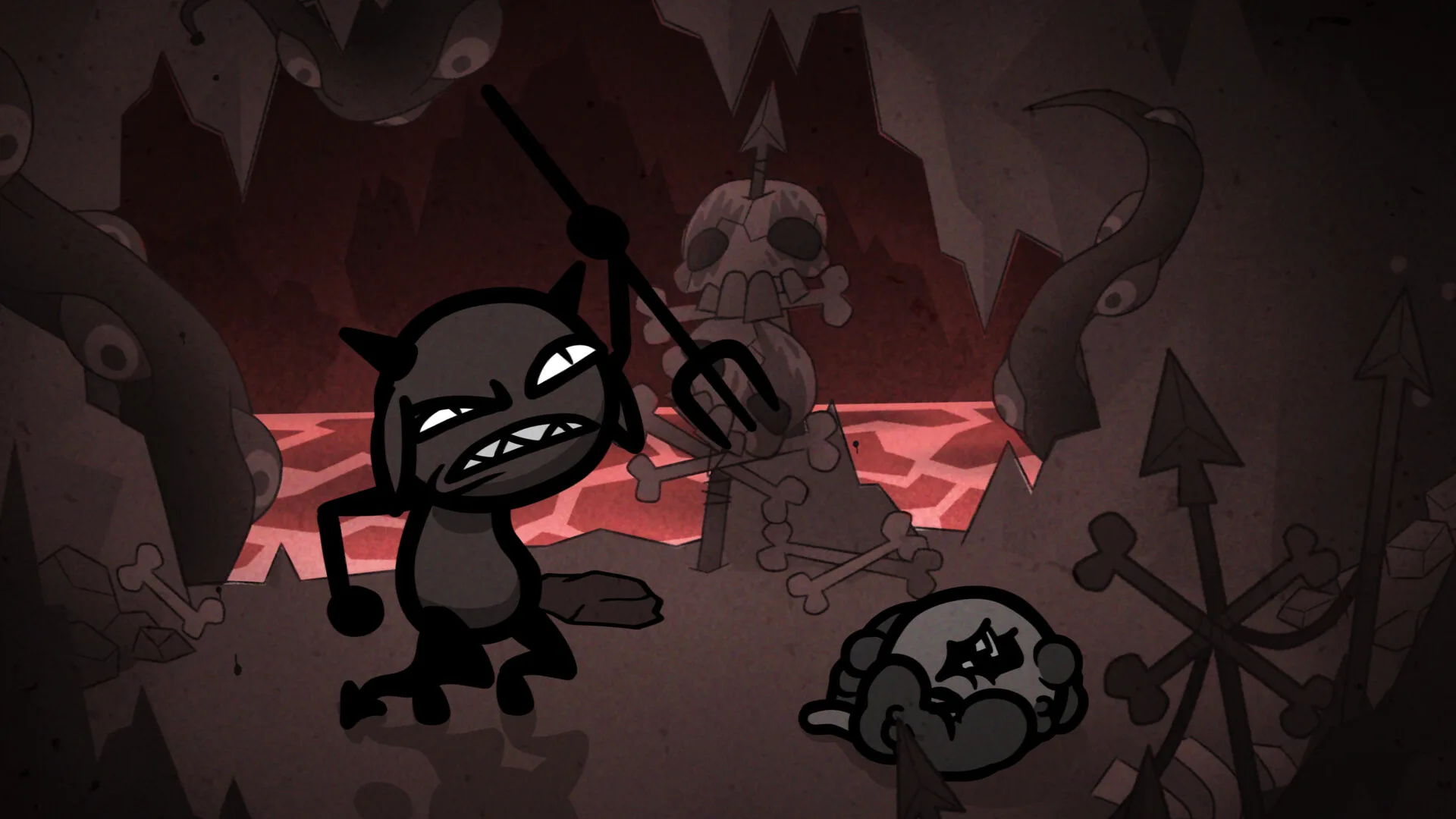
There's a narrative framing in Mewgenics — something about a world recovering from a catastrophic event that left cats as the dominant surviving species, with scattered human remnants existing in various states of dependency on or conflict with cat colonies. It's told through environmental details, item descriptions, and occasional text vignettes rather than cutscenes or dialogue. McMillen has always been better at implication than exposition.
The dark humor is the narrative's strongest element. Item descriptions, cat personality trait descriptions, and the names of enemies are genuinely funny in a way that doesn't feel like a game straining for wit. A passive ability called "Survivor's Guilt" that triggers a massive damage boost whenever an ally dies, with the description "you've outlasted everyone you've ever loved. might as well make use of it," hit differently than I expected. There are dozens of these moments buried in the game's text.
But if you want a real story — characters, arcs, stakes you can articulate — Mewgenics won't provide it. The narrative serves as atmosphere. The actual game is the breeding and fighting. For the audience this game is aimed at, that's probably fine. I'd personally love to see McMillen make a game with Mewgenics' world and a narrative with actual structure, but that's not what this is.
Audio & Soundtrack
The soundtrack is remarkable. Ridiculously so, for a $20 indie game about breeding mutant cats.
The composer — credited as Matthias Bossi and Jon Evans in collaboration with McMillen — has created a score that spans genuinely beautiful ambient lullaby pieces for exploration and colony management sequences, and then pivots to chaotic, almost jazz-influenced intensity for the harder combat encounters. There's a track that plays during a specific late-game boss fight that I had to go find on the game's OST page after it played, because it does something with a piano line over percussion that I couldn't quite parse and needed to hear again without the distraction of also fighting for my life.
The sound effects are also doing heavy lifting. Each cat breed has a distinct sound profile — vocal effects, ability sounds, reaction to being hit. The difference in sound design between a healthy, confident cat performing an ability and the same cat performing the same ability at low health is subtle and perfect. It's the kind of detail that you don't notice consciously but that contributes enormously to the tactile feeling of the combat.
Value & Replayability
Twenty dollars. I keep coming back to this. Mewgenics costs twenty dollars.
I have sixty-three hours in it. I checked yesterday. Sixty-three hours across about five weeks, which breaks down to sessions ranging from a focused ninety-minute run before dinner to a single Saturday where I emerged at 4pm having started at 10am with no memory of eating lunch. The roguelike loop is genuinely compelling in the way that Isaac and Balatro and Hades are compelling — every run feels like a question: what configuration of cats and items and mutations will the game offer me this time, and what can I build with it?
The cat roster — the collection of breed types and personality combinations — is large enough that after sixty hours I'm still seeing first runs of specific breeds. The genetic system means that even familiar breeds combine in novel ways depending on what you've been breeding in previous sessions. There's a persistent meta-progression layer that unlocks new starting options and special encounters without trivializing runs, which is exactly the balance these games need.
The game doesn't have online multiplayer, co-op, or competitive modes. It doesn't need them. This is a single-player experience designed with absolute focus, and it's better for it. McMillen has said in interviews that console ports are planned but not scheduled. When they arrive — especially if they bring controller support — this game is going to find an enormous new audience. Until then, PC players get it first, and PC players should play it immediately.
Final Verdict
Mewgenics is not what I expected after fourteen years. I expected something rougher — a game with ambitious systems and visible seams, the product of too many reboots and one man's inability to call something done. What I got was one of the most polished and mechanically inventive roguelikes since The Binding of Isaac: Repentance. Team Meat — and McMillen specifically — spent those years actually making something worth the wait.
The cat genetics system alone is worth the price of entry. The way it interacts with the tactical combat, the item synergies, the personality conflicts, and the run structure creates an emergent discovery space that I genuinely haven't seen executed this well in the genre. It's difficult and initially opaque and visually challenging in ways that will alienate a meaningful portion of players. It's also, for the right player, one of the best twenty dollars you'll spend on a game this year.
A million people bought it in the first week. Edmund McMillen has been making games for twenty-five years and still managed to ship something that feels genuinely new. That's not nothing. That's everything.
Pros
- Cat genetics and breeding system is one of the most original mechanics in roguelike history
- Item synergies create emergent, run-breaking moments of pure discovery
- Edmund McMillen's dark humor is perfectly calibrated — horrifying and funny in equal measure
- Soundtrack is a genuine standout, ranging from lullaby-gentle to chaotically intense
- Remarkable content depth for a $20 game — runs stay fresh dozens of hours in
- Performance is flawless; runs equally well on low-end hardware
Cons
- Early runs feel opaque and punishing before you understand the breeding meta
- The visual style is an acquired taste — deliberately grotesque cats will put some players off immediately
- No console release yet; the game clearly wants controller support and a couch setting
- Narrative framing is thin — the dark world context could use another layer of storytelling
Frequently Asked Questions
- Is Mewgenics coming to console?
- Edmund McMillen has confirmed that console versions of Mewgenics are planned but has not provided a release window or confirmed which platforms will receive ports. Given Team Meat's history, Switch, PS5, and Xbox versions are likely eventual targets. The game would be well-suited to the Steam Deck, where it already runs well in portable PC mode. For now, Mewgenics is a PC exclusive on Steam.
- What are the best cat builds in Mewgenics?
- Mewgenics' best builds change as McMillen patches the game, but generally, builds centered on poison-passive cats with high speed stats are consistently strong — poison bypasses most defensive abilities. Coward-personality cats paired with item effects that trigger on movement can generate enormous damage in certain encounters. The most powerful runs typically involve breeding toward a dominant trait like the Survivor's Guilt passive combined with a glass-cannon speed build. Community resources on the Mewgenics Steam forums have current meta breakdowns if you want specific recommendations.
- How long does a Mewgenics run take?
- A standard Mewgenics run takes between 45 minutes and 2 hours depending on run length setting and how much time you spend in the breeding interface between combat encounters. The game lets you customize run depth at the start, so shorter runs can be configured for 30-45 minute sessions if you prefer. Failed early runs obviously take less time. Most players find that once they understand the systems, 60-90 minutes is a typical successful run length.
- Is Mewgenics too hard for casual players?
- The first several hours of Mewgenics are legitimately difficult and somewhat opaque, even for experienced roguelike players. The game doesn't explain the genetics system well, and understanding personality trait interactions requires trial and error. There are difficulty options that soften the challenge, and the persistent meta-progression means each failed run makes you meaningfully stronger. If you enjoy learning systems through experimentation, the difficulty curve rewards patience. If you prefer clearly explained mechanics and gentler ramp-up, the early game will be frustrating.
- How does Mewgenics compare to The Binding of Isaac?
- Both games share Edmund McMillen's authorship and dark humor, but they're structurally quite different. Binding of Isaac is a twin-stick roguelike shooter with item synergies as its core system. Mewgenics is turn-based tactical combat with cat genetics as its core system. Mewgenics is slower-paced and more strategically demanding, while Isaac offers faster, more action-focused gameplay. If you've played hundreds of hours of Isaac and want more McMillen, Mewgenics delivers on that craving while being something genuinely different.
Game Info
- Developer
- Team Meat
- Publisher
- Team Meat
- Release Date
- 2026-02-10
- Platforms
- PC
- Genres
- Strategy, Indie