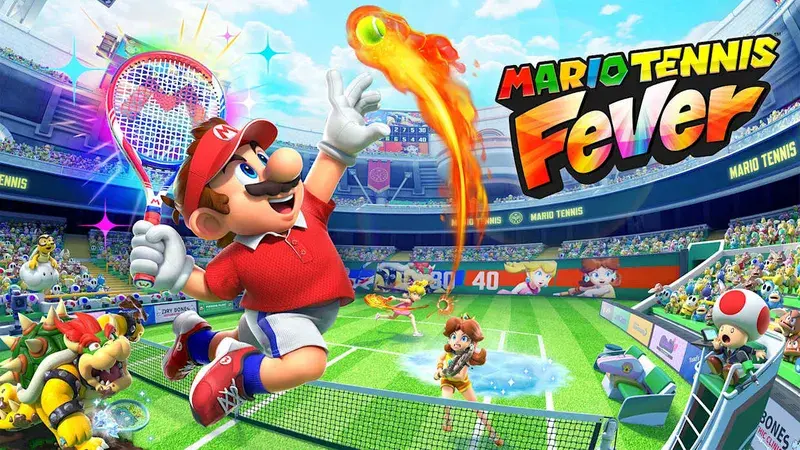
Mario Tennis Fever Review: A Fun but Flawed Ace
Nintendo's Switch 2 showcase delivers addictive tennis with the new Fever Racket system and 38 characters, but a shallow Adventure Mode and inconsistent depth hold it back from greatness.
Introduction
Twenty-five hours into, I have landed on a game that is exactly as good as a Mario Tennis game needs to be – and not much more. The new Fever Racket system is the best mechanical addition the series has seen since Power Shots in Mario Tennis: Power Tour. The 38-character roster is absurdly generous. The Switch 2 hardware makes everything look sharp and run flawlessly. But the single-player content is paper-thin, and the depth that competitive players crave sometimes feels just out of reach. Fever is a party game that wants to be a tournament fighter, and it does not fully commit to either identity.
Gameplay & Mechanics
The core tennis feels great. Shots are mapped to face buttons with intuitive directional control, and the timing-based system rewards precise hits with more powerful returns. Characters fall into six types – All-Around (Mario), Technical (Peach), Speedy (Toad), Tricky (Boo), Powerful (Bowser), and Defensive (Waluigi) – and these categories meaningfully affect how you approach each match. Playing as Bowser feels fundamentally different from playing as Toad, and the roster's diversity of 38 characters, including unconventional picks like Goomba and Chain Chomp, keeps matchups fresh.
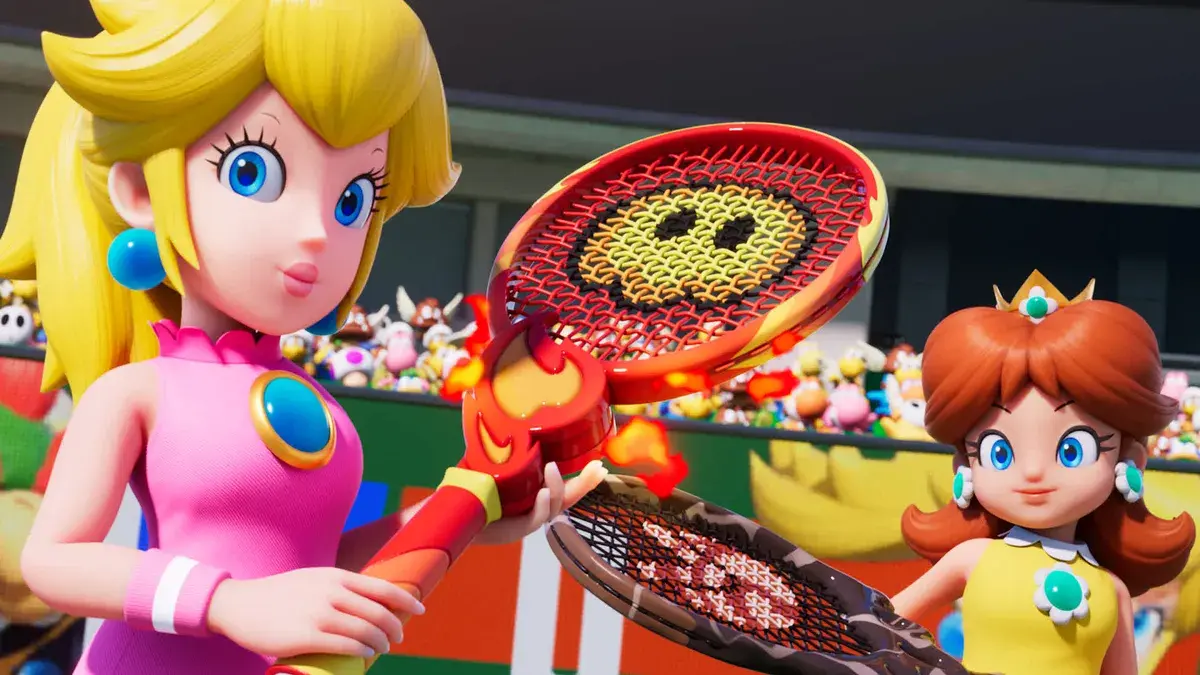
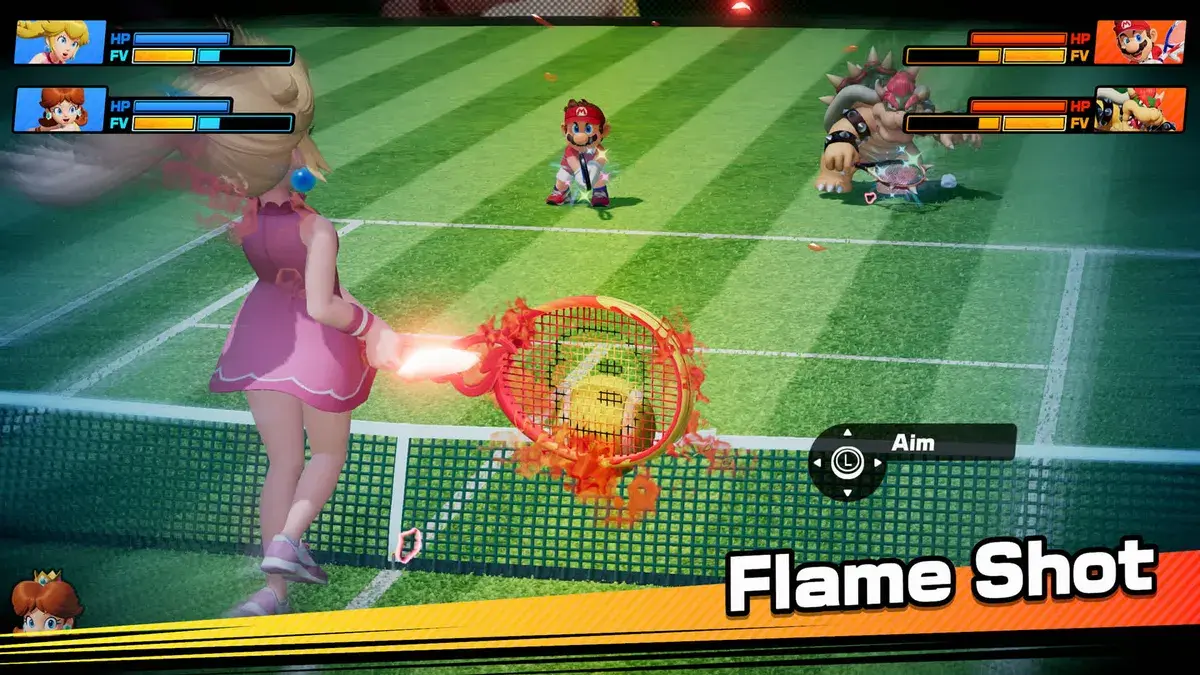
The headline feature is Fever Rackets. Each character has a unique Fever Racket that charges during rallies. Once charged, pressing X while hitting the ball unleashes a character-specific power shot – Mario's fireballs, Peach's heart-seeking curve, Bowser's ground-pound slam. These can be returned if you reach them before they bounce, which creates tense back-and-forth exchanges at higher skill levels. Importantly, Fever Rackets can be disabled entirely in custom matches, so purists who want clean tennis have that option. This is smart design – the system adds casual appeal without alienating competitive players.
The mode list covers the basics: Free Play for local matches, Mix It Up for random rule variations, Swing Mode for motion controls, Ranked Match for competitive online play, and Online Rooms for custom lobbies. The online infrastructure is solid – matches connected quickly in my testing, and input lag was minimal on stable connections. Ranked play uses a tiered system that provides clear progression goals.
Where Fever falls short is single-player depth. Adventure Mode stars Baby Mario in a 5-hour campaign that functions more as an extended tutorial than a genuine story mode. You learn mechanics progressively, face AI opponents with escalating difficulty, and unlock cosmetic items. It is perfectly functional but utterly forgettable. Tournament Tower offers escalating AI challenges with better pacing, but it still feels like the game is pushing you toward multiplayer as fast as possible.
Graphics & Performance
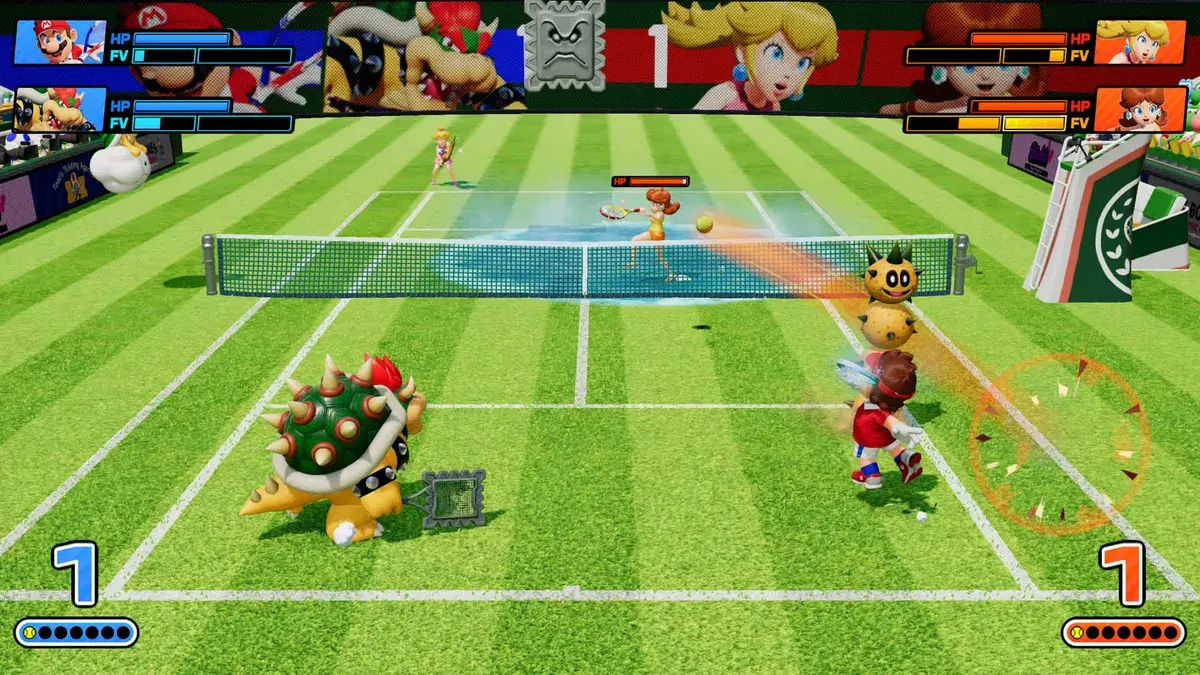
Mario Tennis Fever is a visual showcase for the Switch 2. Character models are detailed and expressive, with subtle animations during celebrations and frustration moments. Courts range from standard clay and grass to fantastical environments – a lava court with Thwomps crashing down mid-rally, an underwater court with altered physics, a haunted mansion court where Boos interfere with ball trajectory. Each hazard court introduces a gimmick that forces you to adapt your strategy.
Performance is flawless. Zero slowdown during even the most chaotic doubles matches, and load times between matches are virtually nonexistent. The Switch 2's hardware is overkill for a tennis game, but the smooth 60fps and crisp visual presentation make it the best-looking Mario sports game to date. Cutscenes in Adventure Mode show off character detail, though the game prioritizes gameplay performance over visual pushing – a reasonable trade-off for a sports title.
Story & Narrative
Adventure Mode follows Baby Mario on a journey to become a tennis champion, encountering various Mario universe characters along the way. The narrative is minimal – cutscenes are short, dialogue is simple, and the story exists purely to justify the tutorial structure. If you are coming to a Mario Tennis game for story, you are in the wrong genre. The real narrative is the rivalries you build in online ranked play, and those write themselves.
Audio & Soundtrack
The soundtrack is cheerful and energetic, matching the visual tone perfectly. Each court has its own musical theme, with standouts being the haunted mansion's pipe organ riffs and the lava court's percussive intensity. Character voice clips are expressive and varied – you will hear different reactions for winners, losers, and close calls. The sound design for ball impacts is satisfying, with a distinct thwack for powerful shots and a lighter ping for slices. It is not a soundtrack you will listen to outside the game, but it serves the experience well.
Multiplayer
Multiplayer is where Fever earns its keep. Local doubles with four players on a hazard court is the peak Mario Tennis experience – chaotic, competitive, and laugh-out-loud funny when a Thwomp flattens someone mid-serve. Online ranked play provides the serious competitive layer, with a tiered ranking system that gives you something to grind toward. The Fever Racket system truly shines in competitive play, where knowing when to trigger your Fever and when to hold it becomes a crucial tactical decision.
The caveat is that multiplayer quality varies dramatically based on your opponents. Against players of similar skill, Fever is electric. Against significantly better or worse players, it can feel either hopeless or tedious. Matchmaking does a decent job of finding appropriate opponents in ranked, but casual quickplay can be a crapshoot. The absence of a robust tournament mode for online play feels like a missed opportunity.
Final Verdict
Mario Tennis Fever delivers exactly what it promises: fun, accessible tennis with a creative twist. The Fever Racket system is well-designed, the roster is huge, and the Switch 2 performance is flawless. But the shallow single-player content, inconsistent multiplayer matchmaking, and lack of mechanical depth compared to Aces prevent it from achieving its full potential. It is the best Mario Tennis game for casual play and a solid option for competitive players, but it never reaches the heights that the Switch 2 hardware and 38-character roster suggest it could. A 7/10 – good, not great.
Buy if: You regularly play local multiplayer games and want a polished Switch 2 showcase, or you enjoy ranked online competition in sports games.
Skip if: You are a solo player looking for deep single-player content, or you expected Mario Tennis Aces' mechanical complexity with a bigger roster.
Technical Performance
Across SWITCH 2, Nintendo / Camelot has delivered exemplary technical execution. Load times are rock-solid, and the overall experience is framed by smooth and consistent frame delivery. Nintendo has clearly invested in optimizing for available hardware, with virtually no technical complaints to report.
Frame pacing holds up well during standard gameplay sequences. More intensive set-pieces – large-scale combat encounters, densely populated environments – occasionally stress the engine, but these moments are brief and do not undermine the broader experience. Players on SWITCH 2 can expect a polished, well-tested build at launch.
Bug density is low for a release of this scope. The most commonly reported issues at launch involve minor visual glitches and edge-case collision errors that Nintendo is likely to address in post-launch patches. Overall, the technical state reflects a developer that has spent proper time in QA, and the performance score of 9/10 reflects an honest assessment of what players will encounter on day one.
Who Should Play Mario Tennis Fever Review
Mario Tennis Fever Review is a solid recommendation for enthusiasts for fans of the sport who want both simulation depth and pick-up-and-play accessibility. If fever racket system adds genuine strategic depth without disrupting the core tennis feel appeals to you, this title will likely deliver exactly what you are looking for across SWITCH 2.
Players new to the sports, tennis genre will find Nintendo / Camelot's design approachable enough to serve as an entry point, while veterans will appreciate the depth hidden beneath the surface. The game rewards patience and exploration in equal measure, making it a strong fit for those willing to invest time in understanding its systems.
On the other hand, if adventure mode is a glorified 5-hour tutorial featuring baby mario – not a real campaign is a dealbreaker for your play style, temper your expectations accordingly. Casual players looking for a low-commitment experience may find certain sections demanding, though the overall experience justifies the effort. For those on the fence, a trial run or watching early hours of gameplay footage is recommended before committing to the full purchase price.
Value for Money
Mario Tennis Fever Review represents solid value for the right buyer. The main campaign runs approximately 20 to 50 hours depending on playstyle and difficulty selection, and the price-to-content ratio sits comfortably in line with genre peers.
Nintendo's post-launch support history is worth factoring into the purchase decision. If the studio has a track record of free updates and content additions – which many modern developers do – the long-term value proposition improves substantially beyond the initial purchase price. Check the developer's history before buying if ongoing content is important to your decision.
Waiting for a modest discount would make this an even stronger proposition, but full-price buyers will not feel shortchanged. For players who already own the hardware and enjoy the genre, the value score of 7/10 reflects an honest assessment: this is a game that earns its asking price through quality of execution, not just raw content volume. Completionists and explorers will find additional hours beyond the main content, which pushes the value equation further in the game's favor.
Pros
- Fever Racket system adds genuine strategic depth without disrupting the core tennis feel
- 38 playable characters is the largest roster in Mario Tennis history
- Zero slowdown and virtually nonexistent load times showcase Switch 2 hardware
- Ranked online matches with solid netcode provide long-term competitive play
- Six character types (All-Around, Technical, Speedy, Tricky, Powerful, Defensive) create meaningful variety
- Courts range from standard grass to creative hazard-filled arenas
Cons
- Adventure Mode is a glorified 5-hour tutorial featuring Baby Mario – not a real campaign
- Single-player content feels thin outside of Tournament Tower
- Multiplayer quality depends heavily on opponent skill level – matchmaking can be uneven
- Some reviewers found the simplified mechanics a step back from Mario Tennis Aces
- Limited court customization compared to what the Switch 2 hardware could support
Frequently Asked Questions
- How many characters are in Mario Tennis Fever?
- Mario Tennis Fever features 38 playable characters, the most in series history. Characters are divided into six types: All-Around, Technical, Speedy, Tricky, Powerful, and Defensive. The roster includes unconventional picks like Goomba and Chain Chomp.
- What is the Fever Racket system?
- Fever Rackets are character-specific power-ups that charge during rallies. Once ready, pressing X during a shot triggers a unique power shot. Opponents can return Fever Shots before they bounce, creating competitive counterplay. The system can be disabled in custom matches for purists.
- Is Mario Tennis Fever worth it for single player?
- The single-player content is limited. Adventure Mode is a 5-hour tutorial campaign, and Tournament Tower offers escalating AI challenges. If you primarily play solo, the content may feel thin. The game is strongest in local and online multiplayer.
- Does Mario Tennis Fever have online play?
- Yes. Online features include Ranked Match with a tiered progression system, Online Rooms for custom lobbies, and various multiplayer modes. Netcode quality was solid in testing, with minimal input lag on stable connections.
Game Info
- Developer
- Nintendo / Camelot
- Publisher
- Nintendo
- Release Date
- 2026-02-01
- Platforms
- Switch 2
- Genres
- Sports