Tomb Raider Mobile Review: Netflix Adventure
Crystal Dynamics delivers a surprisingly competent mobile Tomb Raider experience through Netflix Games, with touch-optimized traversal, classic puzzle design, and a campaign that.
Introduction
Mobile games based on console franchises have a terrible track record. For every good port, there are a dozen cynical cash-grabs that slap a familiar name on generic free-to-play mechanics and call it a day. So when Netflix announced a Tomb Raider mobile exclusive developed by Crystal Dynamics themselves – not a third-party studio, not a contracted mobile developer, but the actual studio behind the modern Tomb Raider trilogy – the question wasn't whether it would be good. The question was whether a mobile game could ever do Lara Croft justice.
The answer is a qualified yes. Tomb Raider for Netflix Games is a compact, well-crafted adventure that translates the franchise's core identity – exploration, puzzle-solving, and tomb raiding – to touchscreens with more success than anyone expected. It's not a console game squeezed onto a phone. It's a mobile game designed from the ground up that happens to feel authentically like Tomb Raider.
Gameplay & Mechanics
The game is structured as a linear adventure broken into 30 chapters, each designed to be completed in 15-20 minute play sessions. It's a smart concession to mobile habits – you can raid a tomb on a commute and pick up exactly where you left off. Each chapter typically features a mix of traversal (climbing, swinging, sliding), an environmental puzzle, and occasionally a combat encounter.
Climbing is the highlight. The touch controls use a dual-thumb system where the left thumb controls Lara's movement and the right handles camera rotation. Jumping between ledges, shimmying across cliff faces, and timing leaps onto moving platforms feel responsive and satisfying. The game provides subtle visual cues – handhold textures, camera angles, environmental lighting – that guide you through traversal sections without resorting to explicit tutorials or glowing waypoints. It's the kind of environmental design language that console Tomb Raider games excel at, and it translates well to mobile.
Puzzles are the other strength. Each tomb features physics-based environmental puzzles that require you to manipulate water flow, redirect light beams, shift stone blocks, or trigger ancient mechanisms in specific sequences. They're not as complex as the console games' challenge tombs, but they require genuine thought and observation. A standout puzzle in a Cambodian water temple involves redirecting three separate water channels by rotating stone rings at different heights – simple in concept, tricky in execution. Compared to Monument Valley's puzzle-focused mobile design, these feel grounded in physical logic rather than abstract spatial thinking.
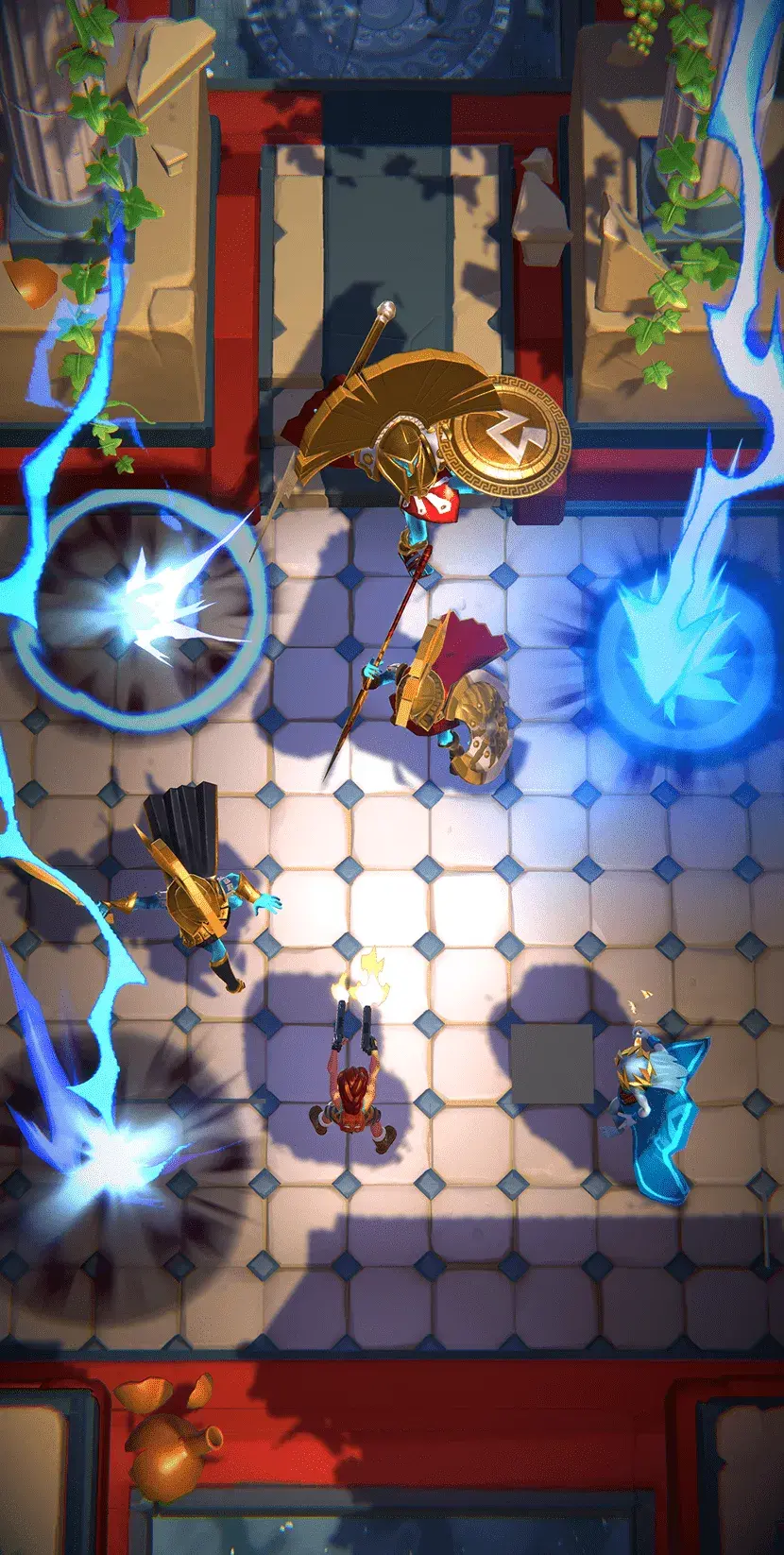
Combat is the weak link. Encounters are simplified to a cover-and-shoot template where Lara auto-aims at the nearest enemy while you tap to fire, swipe to dodge, and hold to use a secondary weapon. It works mechanically, but there's no strategic depth – every fight plays out the same way regardless of enemy type. The bow, pistol, and shotgun feel interchangeable, and stealth sections that let you bypass combat entirely are more satisfying than the actual gunfights. Given how well the traversal and puzzles work, the combat feels like an obligation rather than a design choice.
Controller support is available for both iOS and Android, and it dramatically improves the experience for players who find touch controls imprecise. With a connected controller, camera control becomes fluid, combat gains precision, and platforming sections that were occasionally fiddly become smooth and reliable.
Collectibles are integrated organically rather than gatekept behind separate modes. Each tomb contains hidden relics – small artifacts that unlock lore entries about the civilization that built the location. Finding all relics in a chapter rewards a cosmetic outfit change for Lara, which is a minor incentive but provides enough motivation to examine every corner. The game also tracks completion percentages per chapter, so you can see which tombs you've fully explored and which still hide secrets. It's a clean, no-pressure approach to completionism that respects mobile play patterns.
Difficulty is forgiving by franchise standards. The game offers three difficulty settings, with the default providing generous checkpoint spacing and subtle traversal assists that highlight climbable surfaces. The hardest mode removes visual aids and reduces checkpoints, creating something closer to the original Tomb Raider's trial-and-error approach. It's a smart range that makes the game accessible to casual mobile players while giving franchise fans a reason to push their skills.
Graphics & Performance
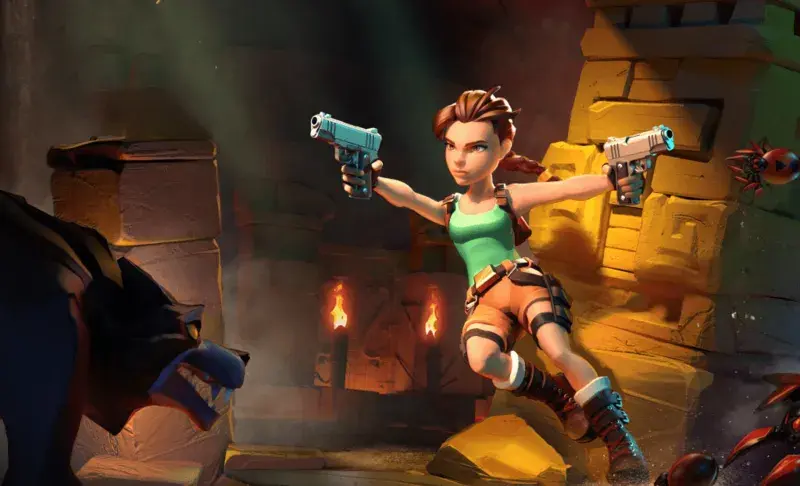
For a mobile title, this is visually impressive. Jungle environments are dense with foliage, ancient temples have convincing stone textures and atmospheric lighting, and Lara's character model is detailed enough to show gear wear and environmental grime. The art direction leans toward the modern reboot trilogy's aesthetic – realistic proportions, muted color palette, survival-focused tone – rather than the classic series' more exaggerated style.

Performance varies by device. On an iPhone 15 Pro, the game runs at a smooth 60fps with detailed shadows and particle effects. Older devices like an iPhone 12 maintain playability at lower graphical settings but sacrifice environmental detail and run at 30fps. Android performance is more variable – flagship devices handle it well, but mid-range Android phones can struggle with loading times and occasional frame drops in complex environments.
Story & Narrative
The story sends Lara across five global locations – a Peruvian jungle, an Egyptian pyramid, a Cambodian temple complex, a Greek island, and a Himalayan monastery – in pursuit of an artifact connected to an ancient civilization. If that sounds generic, it is. The plot serves as a delivery mechanism for diverse environments rather than a compelling narrative in its own right. Supporting characters are introduced and forgotten within individual chapters, and the villain's motivations are standard "power-hungry archaeologist" fare.
What works is the environmental storytelling within each tomb. Murals, inscriptions, and architectural details tell micro-stories about the civilizations that built these places, and Lara's audio commentary provides context without over-explaining. It's not the emotional depth of the modern trilogy, but it's enough to keep you moving forward with curiosity rather than just mechanical completion.
The five locations offer genuine visual and mechanical variety. Peru's jungle ruins feature vine-swinging traversal and crumbling stone platforms. Egypt's pyramid interiors use light-reflection puzzles that require rotating mirrors in specific sequences. Cambodia's water temple is the puzzle highlight, with its multi-level water channel manipulation. The Greek island introduces timed platforming across volcanic terrain, and the Himalayan monastery caps the game with its most demanding climbing sequences, combining vertical ice-wall ascents with wind-based hazards that require timing your movements between gusts. Each location feels distinct enough that the 8-10 hour campaign never hits a monotonous stretch.
Audio & Soundtrack
The soundtrack is understated but effective, with ambient compositions that shift based on environment – tribal percussion in Peru, ethereal strings in Cambodia, wind instruments in the Himalayas. Lara's voice performance is solid, delivered with the same determined-but-weary tone of the modern trilogy. Sound effects for climbing – stone crumbling, rope creaking, water dripping – add tactile weight to the traversal. It's not a soundtrack you'll seek out separately, but it enhances the experience without being intrusive. One nice audio touch: the game supports spatial audio on supported devices, and the directional cues during climbing sections – hearing stone crumble to your left before a handhold gives way – add a functional layer to the sound design that goes beyond atmosphere.
Value & Replayability
The full campaign takes about 8-10 hours across 30 chapters, which is substantial for a mobile game included with a Netflix subscription. There are no microtransactions, no ads, no energy timers, no premium currencies. You download it, you play it, you finish it. In a mobile market defined by monetization manipulation, this straightforward approach is refreshing.
Replayability is limited – there's no New Game Plus, no difficulty settings, and collectibles are found organically during the main path rather than requiring backtracking. But for a free-with-subscription mobile game, the value proposition is excellent. You're getting a genuine Tomb Raider experience at no additional cost beyond your Netflix membership. Compared to Apple Arcade's premium mobile offerings, this sits comfortably in the upper tier of subscription-included mobile games.
Final Verdict
Tomb Raider on Netflix Games succeeds by understanding what makes the franchise special and adapting it intelligently to mobile. The climbing is responsive, the puzzles require real thinking, and the visual quality punches above its platform's weight class. Combat is a disappointment, and the story is forgettable, but those are secondary concerns in a game that nails the tomb-raiding part of Tomb Raider. The absence of microtransactions in a mobile game of this quality is worth celebrating on its own.
Buy if you have a Netflix subscription and enjoy puzzle-focused adventure games, you want a mobile game that respects your intelligence, or you're curious whether a proper Tomb Raider can work on a phone. Skip if you need deep combat mechanics in your action games, you don't have a Netflix subscription, or you only accept Tomb Raider at console fidelity.
Pros
- Touch controls for climbing and traversal are surprisingly responsive and well-adapted
- Classic Tomb Raider puzzle design with environmental logic and exploration
- No microtransactions or ads – included free with Netflix subscription
- Visually impressive for a mobile title, with detailed environments and fluid animation
- Bite-sized chapter structure works perfectly for mobile play sessions
- Controller support for players who prefer physical inputs
- Faithful to franchise DNA without feeling like a cash-in
Cons
- Combat is simplified to the point of feeling like an afterthought
- Story is generic globe-trotting adventure without memorable characters
- Some puzzle solutions rely on tap targets that are too small on phone screens
- Camera control during platforming sections can be fiddly with touch input
Frequently Asked Questions
- Is Tomb Raider Mobile free?
- It's included at no extra cost with a Netflix subscription. There are no microtransactions, ads, or in-app purchases. You need an active Netflix membership to download and play it through the Netflix Games section of the app.
- How long is Tomb Raider Mobile?
- The full campaign spans 30 chapters and takes about 8-10 hours to complete. Each chapter is designed for 15-20 minute sessions, making it well-suited for mobile play patterns.
- Does Tomb Raider Mobile support controllers?
- Yes. Both iOS and Android versions support Bluetooth controllers, and the experience is significantly improved with physical inputs. Camera control, combat precision, and platforming all benefit from controller play.
- Is this related to the Tomb Raider console games?
- It's a standalone adventure with no story connections to the modern trilogy or classic games. The gameplay draws from the franchise's core identity – climbing, puzzles, and exploration – but the plot and characters are entirely self-contained.
Game Info
- Developer
- Crystal Dynamics
- Publisher
- Netflix Games
- Release Date
- 2026-03-15