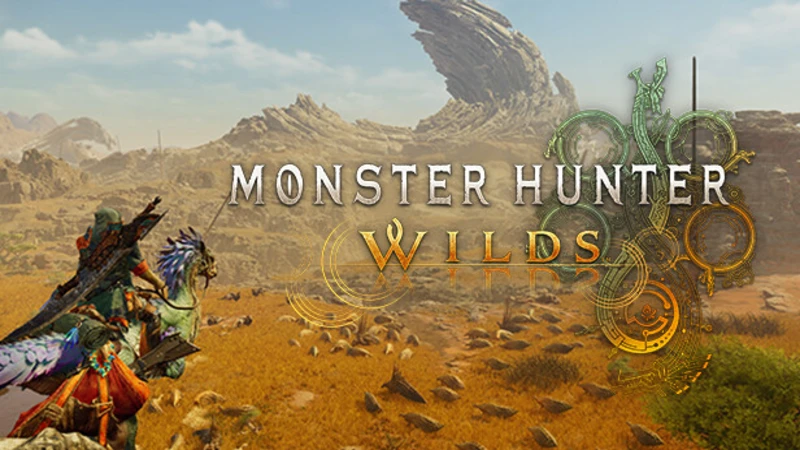
Monster Hunter Wilds Review: An Epic Leap Forward
Monster Hunter Wilds represents a bold evolution of Capcom's legendary franchise, seamlessly merging open-world exploration with the addictive combat that defined the series. Despite significant performance issues on PC, the game's refined mechanics, stunning monster designs, and unexpectedly emotional narrative make it one of the best Monster Hunter experiences ever created.
Introduction
Monster Hunter Wilds is a masterwork of ambition and execution. After 100+ hours hunting across the Forbidden Lands, I can confidently say this is the best Monster Hunter experience ever crafted. Capcom took everything that worked in World, stripped away the clunky mechanics, grafted it into a seamless open world, and added systems that fundamentally transform how you engage with hunts. The result? A game that feels simultaneously like a natural evolution and a gutsy reinvention.
Yes, the PC performance is a travesty. Yes, there are fewer monsters than World at launch. But none of that matters when a hunt against Uth Duna forces you to manage water-based crowd control, swap from your Hammer to your Bowgun mid-fight using your Seikret, and react to environmental hazards that actually impact strategy. This is monster hunting in 2025.
Gameplay & Mechanics
The dual weapon system is the star here. For the first time in the franchise, you can bring two completely different weapons – say, a Great Sword and a Light Bowgun – and swap between them fluidly. Your Seikret holds the secondary weapon in its pouch, and switching takes a single button press. I used this constantly: charging in with the Greatsword when a monster was stunned, then pivoting to a Bowgun when it repositioned. This isn't just a gimmick; it's a genuine tactical layer that rewards planning and punishes rigidity.
Focus Mode is equally transformative. When activated, your movement slows and you gain precision targeting. More importantly, hitting the same monster part repeatedly creates wounds that glow in Focus Mode and deal amplified damage. I found myself toggling Focus Mode strategically – breaking a monster's head to expose a wound, then committing to burst damage. It transforms combat from "mash attack button" to "orchestrate momentum."
The Seikret mount deserves its own paragraph. Unlike World's climbing and mounting mechanics, Seikrets feel like actual companions. You can toggle Auto-Move to your objectives and essentially fast-travel. During hunts, you can mount to drink potions or sharpen your blade while staying mobile – a lifesaver when a monster forces you to kite. Dismounting attacks transition fluidly into ground combat. It's seamless in a way that previous Monster Hunter games never achieved.
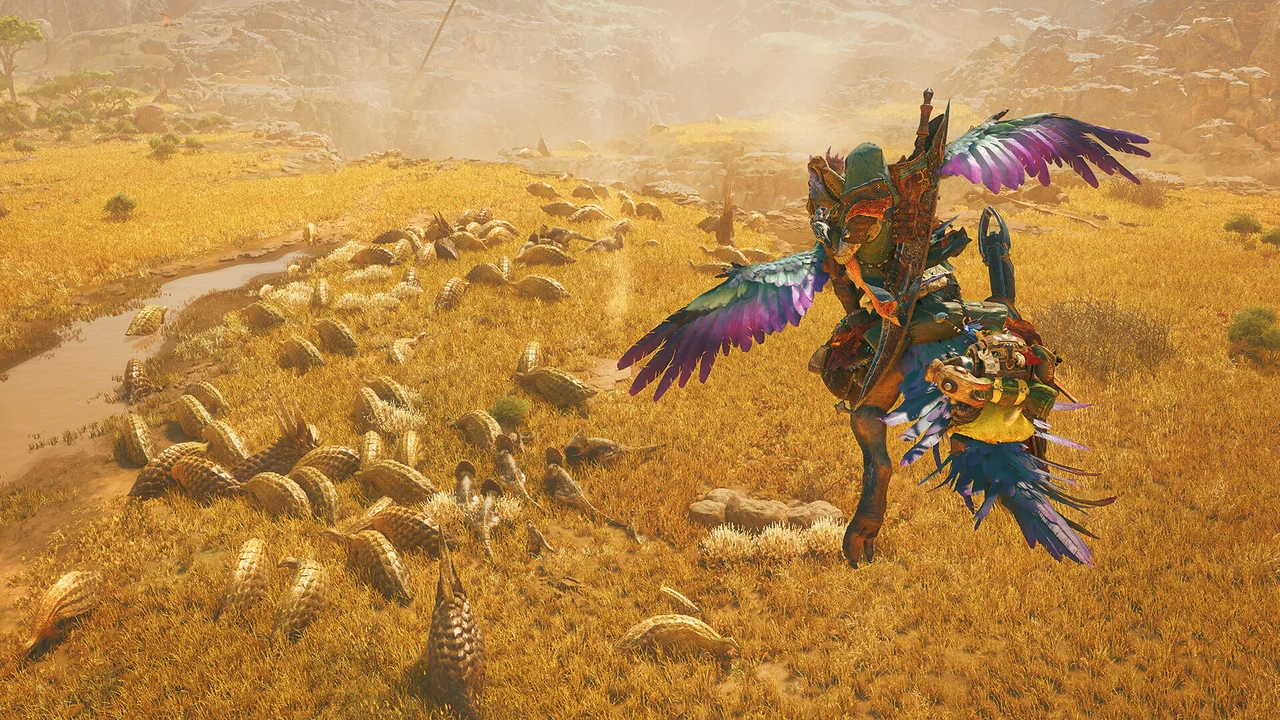
All 14 weapon types return, and every single one has new action combos. The Hammer feels punchier. Dual Blades have new spinning combos. The Insect Glaive's aerial play is more dynamic. Equipment Skills attached to each weapon create build diversity – early weapons already have meaningful skills like Critical Draw and Focus Boost. This encourages experimenting even with "starter" gear.
Graphics & Performance
On PlayStation 5 and Xbox Series X, Monster Hunter Wilds is gorgeous – RE Engine doing what it does best. Monster animations are insanely detailed. Guardian Arkveld's translucent jaw tendrils, Uth Duna's water-like fin formations, and even smaller creatures like Doshaguma have expressive, believable movement. The Scarlet Forest and Windward Plains are lush, with dynamic weather that actually changes how hunts play out. Muddy terrain after rain, flooding near Uth Duna's territory – environmental storytelling through gameplay.
But here's the problem: PC performance is unacceptable. The RE Engine was never designed for seamless open-world streaming, and it shows. Even high-end rigs (RTX 4080, Ryzen 9) drop to 60fps at 1440p on Ultra settings. You need DLSS 3 or FSR 3 frame generation to hit 100fps+ consistently. Without it, you're capped around 75-85fps even at medium settings. This turned me off the PC version entirely – I switched to PS5 for the full experience. Console optimization is night-and-day better.
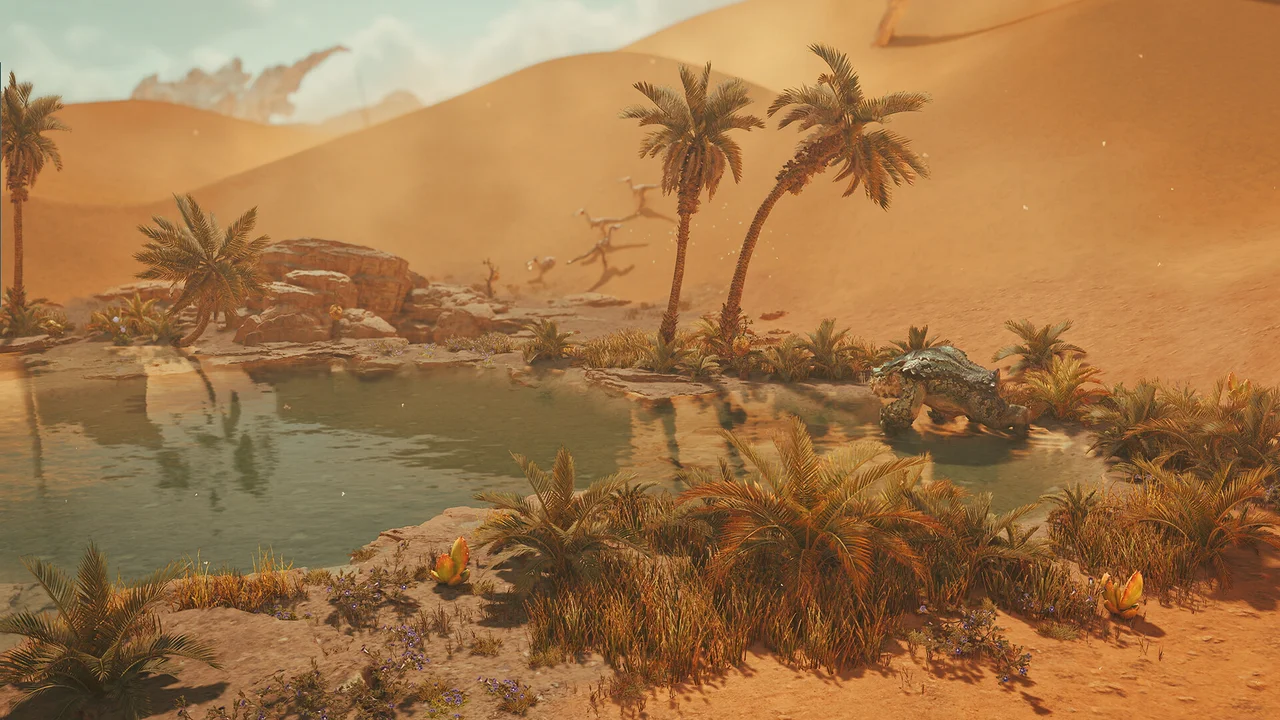
Visually, the open-world has trade-offs. Cutscenes and village/base locations are stunning. But the hunting zones themselves feel sparse – long stretches of terrain with minimal flora density compared to other open-world games. You notice the pop-in more on console, though it's rare. It's a small nitpick, but it undercuts immersion in exploration-focused moments.
Story & Narrative
I was shocked by how good the story is. Monster Hunter games are traditionally barebones – "go hunt this monster" – but Wilds commits to narrative. You're tasked with escorting Nata, a boy from the mysterious Forbidden Lands, back to his village while investigating why a terrifying beast called the White Wraith has been attacking settlements. The setup is simple, but Capcom builds genuine character investment through dozens of cutscenes and village dialogue interactions.
The characters actually grow. Nata goes from mysterious outsider to sympathetic protagonist. Your guild commander, your palico, your fellow hunters – they all have arcs. The story crescendos into what the community is calling "the best scene in Monster Hunter history," and I agree. I won't spoil it, but the narrative payoff legitimately rivals modern action-RPGs. For a franchise known for throwaway plots, this is momentous.
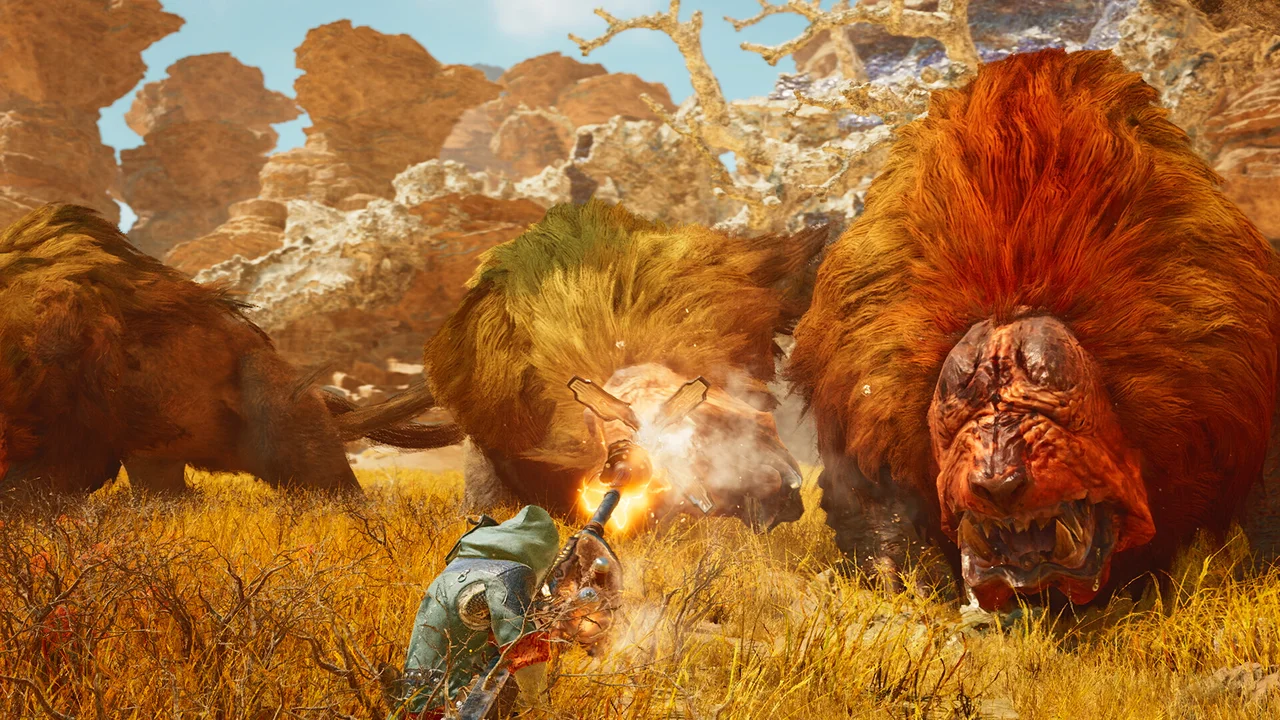
Chapters 1-3 conclude the story proper (about 20-30 hours), but Chapters 4-6 continue with harder hunts and additional story context. The pacing occasionally feels "on rails" – some hunts are mandatory story beats rather than organic monster encounters – but it never becomes tedious because the mechanics are so tight.
Audio & Soundtrack
The monster audio design is phenomenal. Arkveld's roar is guttural and threatening. Uth Duna's water-based attacks have distinct audio queues – that *whoosh* of liquid tentacles gives you tells for incoming attacks. Even smaller creatures have signature sounds that help you identify threats without looking directly at the monster.
The soundtrack is solid but occasionally undersells moments. Boss themes are appropriately epic, but some hunting zone ambiance is forgettable. Voice acting is professional across the board – no cheesy anime moments, just competent dialogue delivery that doesn't distract. Japanese voice acting is the default and it's excellent; English localization is also available for those who prefer it.
Value & Replayability
Monster Hunter Wilds' value proposition is strong but complicated. The main campaign is 20-30 hours. High Rank (chapters 4-6) adds another 30-40 hours of increasingly difficult hunts. Master Rank presumably comes in free updates (a Capcom promise, not yet delivered). For a $60-70 game, that's solid content density.
But here's where it gets sticky: monetization is aggressive. Cosmetic battle pass, premium cosmetics, paid armor transmog – it's all here. For a game that isn't live-service and won't have seasonal content cycles, it feels greedy. You're not missing gameplay content without paying, but the cosmetic shop is hard to ignore. I'd rather Capcom charged $70 upfront and kept cosmetics reasonable.
Monster variety is the main replay limiter. With roughly 40 monsters at launch (compared to World's 80+ at endgame), you'll hunt the same monsters repeatedly. The game mitigates this through different monster combinations and environmental hazards, but it's noticeable. More monsters are coming in updates, but the launch roster feels thin for a franchise built on creature-hunting variety.
Final Verdict
Monster Hunter Wilds is essential for action-game fans. The combination of strategic combat depth, seamless open-world exploration, and surprisingly emotional narrative is rare. Capcom proved you can evolve a beloved franchise without sacrificing what made it special. The mechanical refinements (dual weapons, Focus Mode, Seikret) are the best additions to Monster Hunter in a decade.
But it's not perfect. PC players need to lower expectations hard or accept frame-generation dependency. Monster roster feels incomplete. Monetization is exploitative. These are real friction points, not nitpicks. If you have a PS5 or Xbox Series X, Wilds is an instant purchase – it's the best version of the game and it runs beautifully. PC players should wait for optimization patches or stick to console versions.
This is a 9/10 experience weighed down slightly by technical execution and launch-window content limitations. In six months, when Master Rank drops and the monster roster expands, this could easily be a 9.5. For now? This is where I'm hunting for the next year.
Buy If...
You own a PS5 or Xbox Series X and love challenging action games with deep combat mechanics. You want a Monster Hunter game that respects your time through streamlined quality-of-life features. You appreciate games that balance mechanical depth with accessibility. You're willing to commit 100+ hours to a single game.
Skip If...
You're exclusively a PC gamer and don't have an RTX 4070 Ti+ or DLSS 3 support – frame generation is almost mandatory. You prefer faster, arcade-style action over strategic monster hunting. You want a massive roster of 100+ monsters at launch. You refuse to engage with cosmetic monetization in any form.
Pros
- Seamless open-world design without loading screens eliminates the friction of previous Monster Hunter games
- Dual weapon system and Focus Mode mechanics add genuine strategic depth to combat while maintaining the series' skill ceiling
- The Seikret mount is transformative – repositioning, weapon-swapping, and healing mid-hunt feels natural and empowering
- Monster roster is diverse with memorable flagship designs like Guardian Arkveld and the water-based Uth Duna
- Story and narrative are surprisingly mature and emotionally resonant – best storytelling Capcom's delivered in years
- Combat remains mechanically refined and satisfying across all 14 weapon types with unique equipment skills
Cons
- PC performance is severely compromised – RE Engine struggles with seamless open-world streaming, requiring DLSS/FSR for playable framerates
- Open-world areas lack environmental density compared to other action games; sparse flora/fauna between hunting zones
- Monster roster is smaller than Monster Hunter World at launch, limiting post-game variety
- Aggressive monetization with cosmetic battle pass and premium cosmetics feels exploitative for a full-price title
- UI design is cluttered and unintuitive – menu navigation becomes tedious during extended play sessions
Frequently Asked Questions
- Is Monster Hunter Wilds a good entry point for the franchise?
- Yes. The streamlined tutorial, helpful UI elements, and less punishing learning curve make Wilds more welcoming than World or Iceborne. The story also provides narrative context, whereas previous games were combat-focused. That said, monster hunting is still demanding – expect a learning curve on your first 10-15 hours.
- Do I need to play previous Monster Hunter games to enjoy Wilds?
- Absolutely not. Wilds is a standalone story set in the Forbidden Lands. There are no callbacks that require prior knowledge. Think of it like Dark Souls – each game stands alone, though series veterans will appreciate some familiar monster designs.
- Is the dual weapon system overpowered or does it break balance?
- It's surprisingly balanced. Weapon swapping takes momentum to set up, and you're vulnerable during transitions. It's powerful in coordinated hands but not game-breaking. Single-weapon hunting is equally viable for speedrunners and purists.
- How bad is the PC performance really?
- On high-end hardware (RTX 4080+), you'll need DLSS 3 frame generation to maintain 100+ fps. Without it, expect 60-85 fps even at medium settings. The RE Engine simply isn't optimized for open-world streaming on PC. Console versions run at solid 60fps with stable frame pacing.
- When will Master Rank and more monsters be added?
- Capcom has promised Master Rank as a free update but hasn't announced a date as of April 2026. More monsters will arrive gradually through updates. If you want a "complete" Monster Hunter experience, you might wait 6-12 months for additional content patches.
Game Info
- Developer
- Capcom
- Publisher
- Capcom
- Release Date
- 2025-02-28
- Platforms
- PC, Xbox Series X|S, PS5
- Genres
- RPG, Action