
Darwin's Paradox Review: A Charming Octopus Caper
Darwin's Paradox delivers a short but memorable Pixar-like platformer starring an adorable octopus, held back by repetitive stealth sections and a too-brief runtime.
Introduction
I went into Darwin's Paradox expecting another moody, atmospheric side-scroller in the vein of Limbo or Inside. What I got instead was something closer to a playable Pixar short, starring the most charming cephalopod since Finding Nemo's entire reef cast. Darwin, our eight-armed hero, gets snatched from the ocean and dumped into a sprawling industrial seafood factory. Your job is to get him out alive. It sounds grim, but ZDT Studio and Konami have wrapped this escape story in so much color, humor, and personality that I was grinning through most of my five hours with it. Most, not all, because those stealth sections nearly killed the vibe more than once.
Gameplay & Mechanics
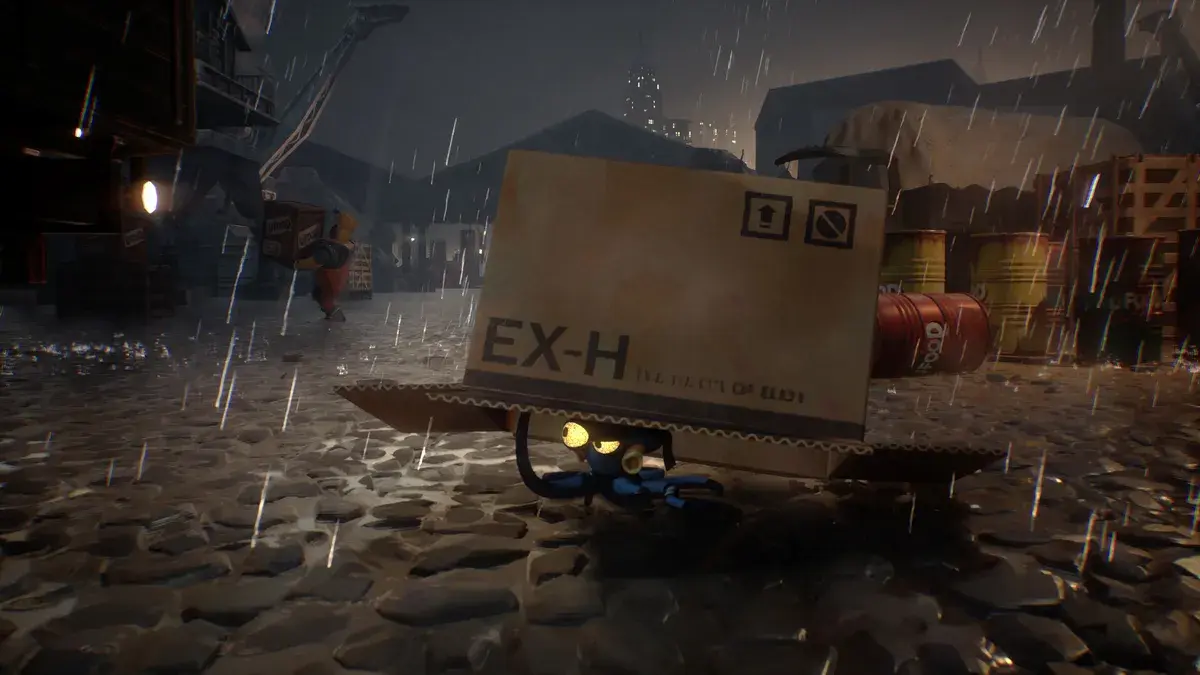
Darwin's Paradox is a 2.5D puzzle-platformer that leans on three core pillars: platforming, stealth, and environmental puzzles. The platforming is the star here. Darwin can stick to nearly any surface thanks to his sucker-covered tentacles, which makes traversal feel wonderfully freeform. You can cling to pipes, slide through vents, and scale walls with a momentum that just feels right. His movement draws directly from real octopus behaviors, and the developers clearly did their homework. Camouflage lets you blend into backgrounds to slip past enemies, while ink-shooting provides a panic button when guards spot you.
The puzzle elements are straightforward. Nothing here will stump you for more than a minute or two, which keeps the pacing brisk but robs the game of any real head-scratching satisfaction. Most puzzles involve pulling levers, redirecting machinery, or using Darwin's tentacles to manipulate objects in the environment. They serve more as pacing breaks between platforming sections than true brain-teasers.
Then there is the stealth, and here is where things get dicey. Roughly a third of the game asks you to creep past spotlights, security cameras, and patrolling seagulls. In a game this lighthearted, the tension just does not land. You are waiting behind cover for patrol routes to cycle, and the stakes feel nonexistent because the tone is so breezy. When the camera swings to a bad angle and a guard catches you through no fault of your own, the frustration feels unearned. Limbo worked its stealth into genuine dread. Darwin's Paradox uses the same template but without the atmosphere to justify it.
Checkpointing can also be punishing during stealth-heavy chapters, sending you back further than feels fair for a game that otherwise respects your time.
Graphics & Performance
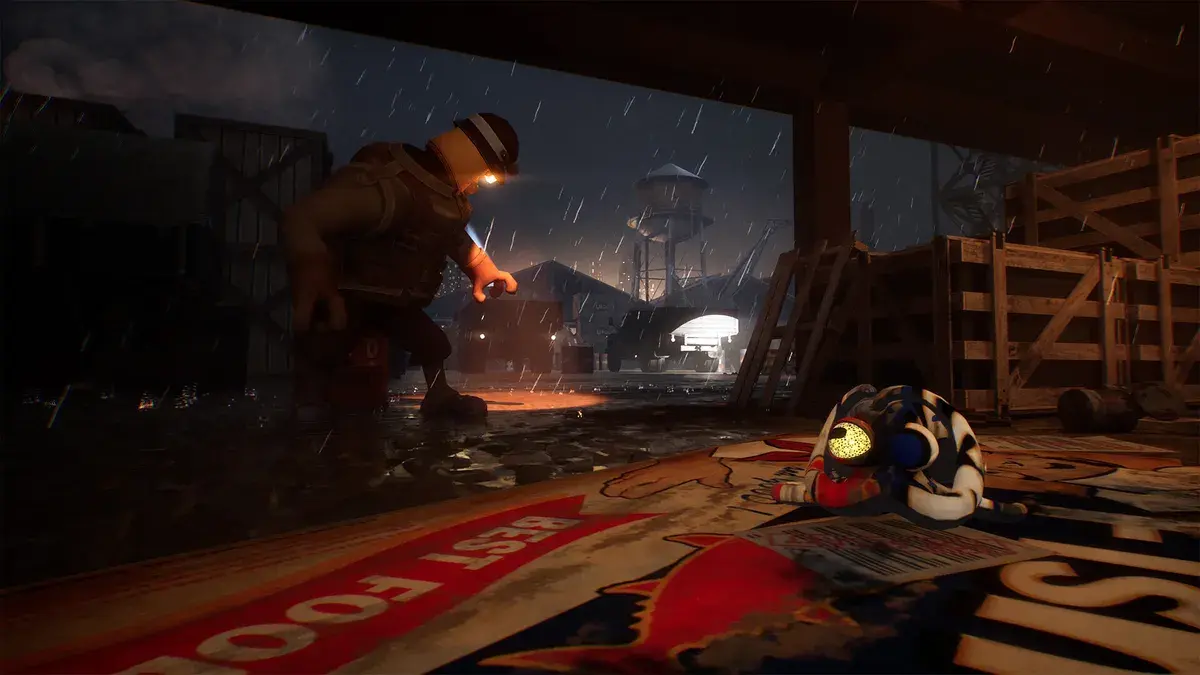
This is where Darwin's Paradox punches well above its weight. The animation quality is exceptional across the board, with Darwin himself moving with the kind of fluid, expressive physicality you would expect from a Pixar protagonist. His tentacles squish, stretch, and react to surfaces in ways that constantly made me stop and appreciate the craft. Pre-rendered cutscenes look like genuine animated film sequences, drawing from the visual DNA of WALL-E, The Incredibles, and Monsters Inc. without feeling derivative.
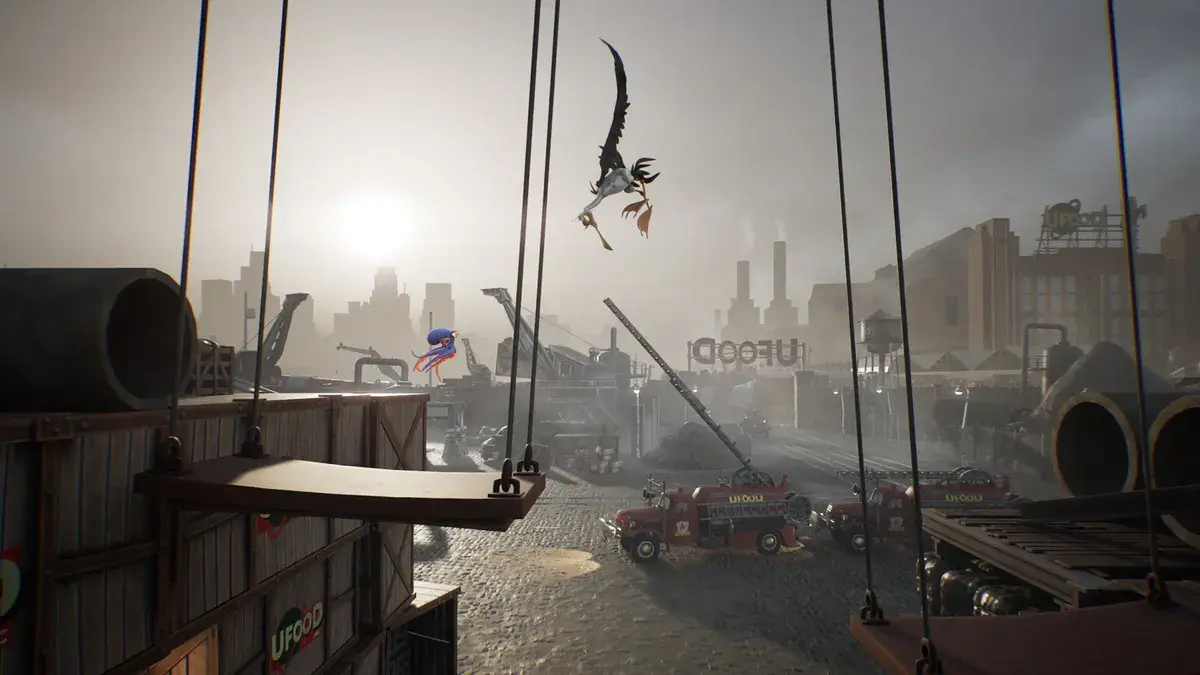
The environments shift from grimy factory interiors to rain-soaked city streets to sun-drenched coastal cliffs, and every setting is packed with incidental detail. One standout sequence has Darwin outrunning a horde of rats through collapsing machinery, and the chaos on screen never drops a frame on PS5. Switch 2 holds up admirably too, though some of the particle effects take a hit. I ran into zero crashes or notable bugs across my entire playthrough.
Story & Narrative
Darwin's Paradox tells its story without a single word of dialogue. Darwin wakes up in a tank, escapes, and begins navigating increasingly absurd scenarios as the factory reveals itself to be something far stranger than a simple seafood processing plant. The narrative escalates from grounded escape thriller to surreal territory that I will not spoil, but think Katamari levels of weird by the final act.
The problem is that the story ends before it earns its conclusion. After five-ish hours of escalating weirdness, the credits roll with more of a shrug than a statement. It is cute enough in the moment-to-moment, but the lack of substance behind the charm means nothing really sticks. Compare this to Inside, which used its wordless format to deliver a gut-punch ending that people still debate. Darwin's Paradox just sort of stops.
Audio & Soundtrack
The soundtrack blends ambient factory clanks with orchestral swells during set-piece moments, and it works well enough without being particularly memorable. There are some clever callbacks to Metal Gear Solid's alert sounds during stealth sections, which got a laugh out of me the first time and a groan by the fifth. The sound design for Darwin himself is excellent: the wet squelch of his tentacles gripping surfaces, the pop of his ink blasts, and the gentle thud of his body hitting water all sell the tactile quality of his movement. No voice acting to speak of, which fits the wordless approach.
Value & Replayability
At five to six hours with minimal replay incentive, Darwin's Paradox is a tough sell at full price. There are hidden collectibles scattered through each chapter, but nothing that fundamentally changes the experience on a second run. No alternate paths, no new game plus, no time trial modes. You play it once, enjoy it, and you are done. For a game published by Konami with a premium price tag, I expected more content to justify the cost. This feels like a $20 experience being sold for $40, and that math matters.
If you catch it on sale, the value proposition improves dramatically. The core experience is delightful. There is just not enough of it.
Final Verdict
Darwin's Paradox is a beautiful, charming, and occasionally frustrating little game that delivers one of the most likable mascot characters in years. When it lets you platform freely and soak in its gorgeous world, it feels like the best PS1-era character platformer we never got, updated with modern production values. But the overreliance on bland stealth drags down the experience, and the short runtime with minimal replay value makes the price hard to swallow. I walked away smiling, but I also walked away wishing there was more game and less sneaking. Buy if you adore Pixar-styled aesthetics and want a cozy weekend platformer. Skip if you need mechanical depth or significant playtime for your money.
Technical Performance
The PC version offers the highest ceiling for image quality, with support for DLSS and FSR scaling technologies. Load times are generally stable, and the overall experience is framed by mostly stable performance with occasional dips. ZDT has clearly invested in optimizing for available hardware, with occasional minor hiccups that rarely disrupt the experience.
Frame pacing holds up well during standard gameplay sequences. More intensive set-pieces – large-scale combat encounters, densely populated environments – occasionally stress the engine, but these moments are brief and do not undermine the broader experience. Players on PC, PS5, XBOX SERIES X, SWITCH 2 can expect a polished, well-tested build at launch.
Bug density is low for a release of this scope. The most commonly reported issues at launch involve minor visual glitches and edge-case collision errors that ZDT is likely to address in post-launch patches. Overall, the technical state reflects a developer that has spent proper time in QA, and the performance score of 8/10 reflects an honest assessment of what players will encounter on day one.
Who Should Play Darwin's Paradox Review
Darwin's Paradox Review is a solid recommendation for enthusiasts for players who enjoy fast-paced combat and reflexes-based challenges. If absolutely gorgeous pixar-quality animation and art direction appeals to you, this title will likely deliver exactly what you are looking for across PC, PS5, XBOX SERIES X, SWITCH 2.
Players new to the platformer, action genre will find ZDT Studio's design approachable enough to serve as an entry point, while veterans will appreciate the depth hidden beneath the surface. The game rewards patience and exploration in equal measure, making it a strong fit for those willing to invest time in understanding its systems.
On the other hand, if stealth sections alternate between annoying and boring, slowing the pace is a dealbreaker for your play style, temper your expectations accordingly. Casual players looking for a low-commitment experience may find certain sections demanding, though the overall experience justifies the effort. For those on the fence, a trial run or watching early hours of gameplay footage is recommended before committing to the full purchase price.
Value for Money
Darwin's Paradox Review represents questionable value at full price for the right buyer. The main campaign runs approximately 10 to 20 hours depending on playstyle and difficulty selection, and the content volume does not fully justify the standard release price. The online component adds additional replay value for players who enjoy competitive or cooperative play, extending the game's lifespan considerably beyond the single-player offering.
ZDT's post-launch support history is worth factoring into the purchase decision. If the studio has a track record of free updates and content additions – which many modern developers do – the long-term value proposition improves substantially beyond the initial purchase price. Check the developer's history before buying if ongoing content is important to your decision.
A sale price of 30 to 40 percent off would make this a much easier recommendation for budget-conscious players. For players who already own the hardware and enjoy the genre, the value score of 6/10 reflects an honest assessment: this is a game that earns its asking price through quality of execution, not just raw content volume. Completionists and explorers will find additional hours beyond the main content, which pushes the value equation further in the game's favor.
Pros
- Absolutely gorgeous Pixar-quality animation and art direction
- Darwin is an instantly lovable protagonist with fluid movement
- Octopus abilities like camouflage and wall-sticking feel creative and grounded in real biology
- Steady pacing keeps introducing new ideas across its five-hour runtime
- Pre-rendered cutscenes rival animated family films in quality
- Puzzles are clever without being obtuse or frustrating
- Wordless storytelling goes in genuinely unexpected directions
Cons
- Stealth sections alternate between annoying and boring, slowing the pace
- Camera angles sometimes cause unavoidable detection before you can assess the situation
- Five to six hours is too short for a full-price release
- Story ends abruptly without much substance or payoff
- Waiting during stealth sequences lacks tension given the lighthearted tone
Frequently Asked Questions
- How long does it take to beat Darwin's Paradox?
- A complete playthrough takes roughly five to six hours. Hunting down all hidden collectibles might add another hour, but there is no new game plus or substantial post-game content to extend the experience further.
- Is Darwin's Paradox similar to Limbo or Inside?
- The structure is similar as a wordless 2.5D puzzle-platformer, but the tone is completely different. Where Limbo and Inside are dark and unsettling, Darwin's Paradox is colorful, silly, and feels more like a playable Pixar short than a moody art game.
- What platforms is Darwin's Paradox available on?
- Darwin's Paradox launched on April 2, 2026 for PlayStation 5, Xbox Series X/S, Nintendo Switch 2, and PC via Steam. Performance is solid across all platforms, with Switch 2 showing minor visual cutbacks.
- Is there multiplayer in Darwin's Paradox?
- No, Darwin's Paradox is a strictly single-player experience. There is no co-op, competitive multiplayer, or online component. It is a focused solo adventure from start to finish.
Game Info
- Developer
- ZDT Studio
- Publisher
- Konami
- Release Date
- 2026-04-02
- Platforms
- PC, Switch 2, Xbox Series X|S, PS5
- Genres
- Action, Platformer